

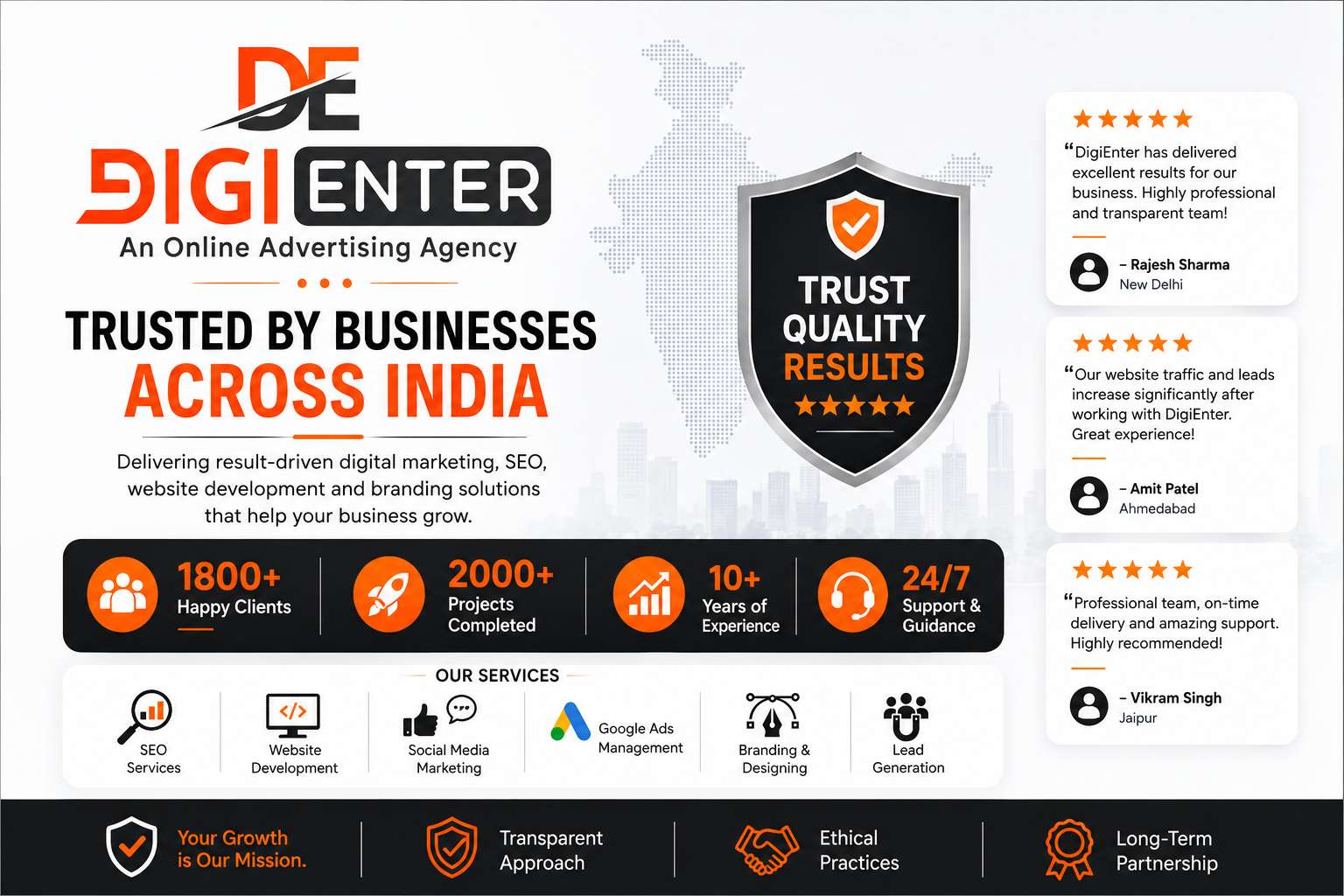
When businesses search for a reliable digital marketing agency, trust becomes the deciding factor.
One of the strongest indicators of trust is genuine client feedback. DigiEnter has earned appreciation
from businesses across multiple cities and states in India through its commitment to quality, transparency,
timely delivery, and measurable results.
Over the years, DigiEnter has worked with startups, SMEs, manufacturers, exporters, service providers,
consultants, e-commerce brands, and local businesses. From website development and SEO to branding,
social media marketing, and lead generation, DigiEnter has helped organisations strengthen their digital presence.
Client reviews provide real-world insights into service quality, communication, professionalism, and outcomes.
Businesses evaluating a marketing partner often look for proof that the agency can deliver results.
The positive feedback received by DigiEnter reflects a strong focus on client satisfaction and long-term growth.
Delhi NCR: Delhi, New Delhi, Dwarka, Gurugram, and Faridabad.
Haryana: Panipat, Karnal, Hisar, Rohtak, Ambala, and Sonipat.
Gujarat: Ahmedabad, Vadodara, Rajkot, Gandhinagar, Bhavnagar, Jamnagar, and Junagadh.
Maharashtra: Mumbai, Pune, Nagpur, Nashik, Aurangabad, Kolhapur, Solapur, Ratnagiri, and Thane.
Rajasthan: Jaipur, Jodhpur, Kota, Bikaner, Alwar, Bharatpur, and Udaipur.
Other important locations include Lucknow, Patna, Hyderabad, and Udupi.
• Professional communication and transparency.
• Timely project execution.
• SEO-focused website development.
• Improved online visibility.
• Better lead generation opportunities.
• Affordable and scalable marketing solutions.
• Long-term support and consultation.
DigiEnter has delivered solutions for manufacturing, packaging, corporate gifting, education, and healthcare,
real estate, hospitality, professional services, NGOs, pest control businesses, e-commerce brands, and startups.
Website Design and Development
Search Engine Optimisation (SEO)
Local SEO
Social Media Marketing
Google Ads Management
Content Marketing
Branding and Creative Services
Lead Generation Campaigns
E-commerce Marketing
Business Growth Focus:
Every project is aligned with measurable business objectives rather than vanity metrics.
Customized Strategies:
Every business has unique goals. DigiEnter creates tailored solutions instead of one-size-fits-all packages.
Transparent Process:
Clients remain informed about project status, milestones, and performance metrics.
Affordable Excellence:
High-quality digital solutions are delivered at competitive pricing.
Long-Term Partnerships:
Many clients continue working with DigiEnter because of trust, reliability, and ongoing support.
Businesses have reported improvements in search visibility, website engagement, brand recognition,
lead quality, and overall digital performance. Through strategic planning and execution, DigiEnter
helps organizations build sustainable online growth.
Is DigiEnter a trusted digital marketing agency?
Yes. Positive feedback from clients across multiple cities and industries reflects a strong reputation for quality and reliability.
What services does DigiEnter provide?
DigiEnter offers website development, SEO, social media marketing, branding, content marketing, Google Ads management, and lead generation.
Does DigiEnter work with businesses across India?
Yes. DigiEnter serves clients from various states and cities across India.
The trust of clients remains the foundation of DigiEnter's success. From Delhi to Mumbai, Ahmedabad to Jaipur,
Hyderabad to Pune and from Patna to Gurugram, businesses continue to choose DigiEnter as their digital growth partner.
Every review serves as motivation to deliver even better results and create lasting value for clients.
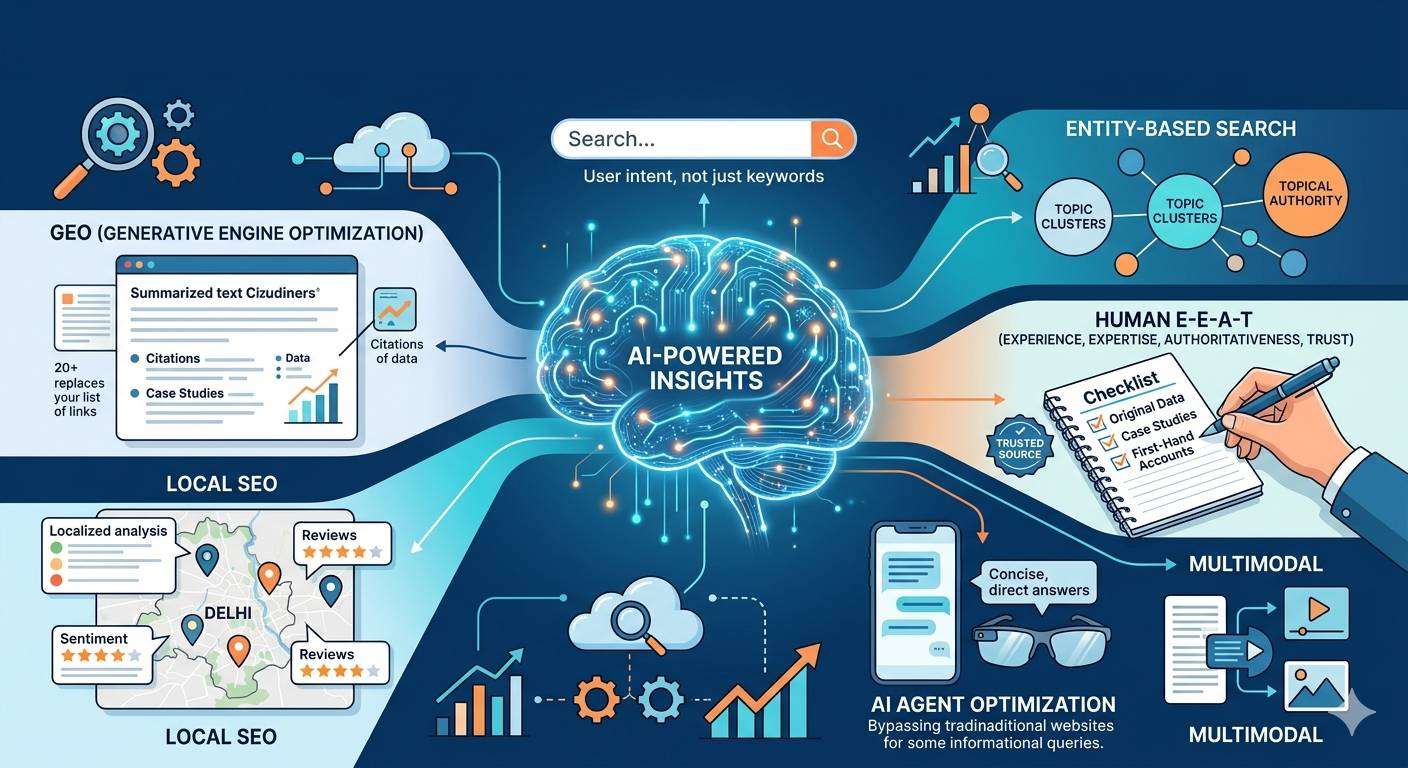
If you’ve been following the digital marketing landscape, you know that the "Search Engine" as we once defined it has officially evolved. By 2026, we are no longer just optimizing for a list of blue links; we are optimizing for a complex ecosystem of generative answers, personal AI assistants, and hyper-personalized discovery.
The "old ways" of SEO, keyword stuffing, backlink farming, and thin content, aren't just ineffective; they are a liability. To stay visible today, you need a strategy that embraces how Artificial Intelligence perceives, synthesizes, and delivers information.
For decades, Google acted as a librarian: you asked for a topic, and it gave you a book. Today, Google and its competitors act as researchers. Through Search Generative Experience (SGE) and sophisticated Large Language Models (LLMs), the search engine now reads the books for you and presents a summarized answer.
The Rise of Zero-Click Searches
In 2026, the "Zero-Click" phenomenon has matured from a traffic threat into a premier branding opportunity. While AI Overviews now resolve most queries directly on the search page, the real victory lies in attribution. When an AI agent informs a user, "According to DigiEnter, the best way to filter B2B leads is through creative-led intent signals," you’ve earned a verified endorsement. This is passive lead generation; the AI builds your authority and establishes trust before the user even clicks your site.
In 2026, AI doesn't just look for words; it looks for Entities. An entity is a person, place, thing, or concept that is uniquely identifiable.
Why Entities Matter?
If you write about "Digital Marketing," the AI understands that this entity is connected to other entities like "Content Strategy," "Meta Ads," and "SEO." To rank well, your website must prove it has a deep understanding of the entire "map" of these connected concepts.
How to optimize for this?
Topic Clusters: Stop writing one-off blog posts. Create "pillar pages" that cover a broad topic and link them to "cluster" posts that dive into specific details. This shows AI that your site is a comprehensive knowledge base.
Semantic Depth: Use natural language. If you’re writing about "Solar Energy," don’t just repeat the phrase. Discuss "photovoltaic cells," "grid-tie inverters," and "net metering." The AI uses these related terms to verify your expertise.
As the internet becomes flooded with AI-generated "commodity" content, the value of human experience has skyrocketed. Google’s E-E-A-T framework (Experience, Expertise, Authoritativeness, and Trustworthiness) is now the primary filter for quality.
Experience is the "X-Factor"
AI can summarize facts, but it cannot experience a product or a process. In 2026, content that includes "I did this," "We tested that," or "In our 10 years of running an agency, we found..." performs significantly better.
To boost your E-E-A-T:
While content is king, the "technical" side of SEO has changed. You aren't just making your site readable for humans; you’re making it "consumable" for AI training models and crawlers.
Schema Markup 3.0
Structured data (Schema) is no longer optional. It is the language that tells AI exactly what your data means. In 2026, using advanced Schema for FAQs, Products, Reviews, and Organizations is like giving the AI a cheat sheet to your website.
Performance and Core Web Vitals
AI agents, personal assistants used by consumers, prioritize speed and reliability. If your site takes four seconds to load, an AI agent will simply bypass your content for a faster source. In 2026, a fast, mobile-optimized site is a prerequisite for even appearing in an AI summary.
We are seeing a transition from traditional SEO to GEO. GEO focuses on how to make your content more "citable" by generative AI.
Strategies for GEO Success:
Local search has become conversational. Users are asking their devices, "Find me a pest control service in Nagpur that uses eco-friendly chemicals and has weekend availability."
To win at Local SEO in 2026:
By 2026, "Search" isn't just text. It’s multimodal. Users are searching via images (Google Lens) and video.
The future of SEO isn't about "beating" the AI; it’s about becoming the source the AI relies on.
| Keyword Frequency | Topical Authority & Entity Mapping |
| High Link Volume | High-Trust Brand Mentions |
| Generic "How-To" Content | First-Hand Experience & Case Studies |
| Focus on Clicks | Focus on Being the "Cited Answer" |
| Text-Only Pages | Multimodal (Text, Video, Audio) Content |
The changes we’re seeing in 2026 represent a return to quality. AI has effectively removed the "shortcuts." You can no longer trick a search engine into thinking you’re an expert; you actually have to be an expert.
For business owners and content creators, this is an incredible opportunity. By focusing on deep, insightful, and technically sound content, you can build a digital presence that doesn't just rank, it dominates the conversation.
The future of SEO is more human than ever. While AI provides the tools, it is your unique experience and authority that will provide the value. Focus on the user, embrace the technology and your website will flourish in this new era of the Answer Engine.
Don't Miss: How Did JMK Pest Controls Scale Digitally with DigiEnter?
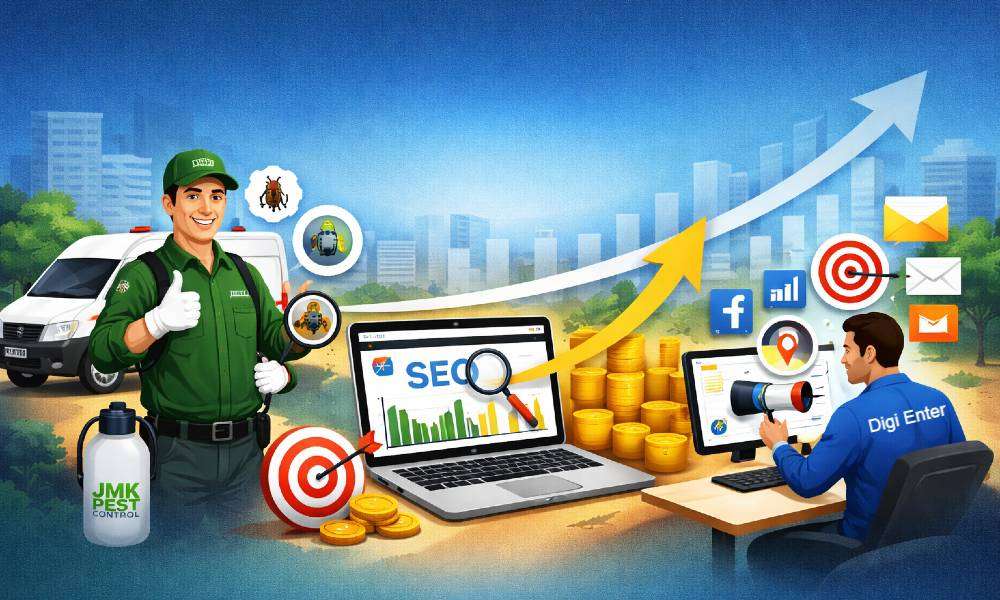
JMK Pest Controls Pvt. Ltd., based in Nagpur, is a well-established name in the pest control industry. They had a strong local reputation, but they recognized the need to expand their digital footprint and reach a wider audience. They partnered with DigiEnter, a digital marketing agency, to help them scale their business online.
JMK Pest Controls faced the common challenge of many service-based businesses in the digital age: establishing a strong online presence and reaching the right customers. While they had a strong local presence, they needed a way to attract high-intent customers who were actively looking for pest control services.
DigiEnter developed a comprehensive digital marketing strategy for JMK Pest Controls, focusing on two key pillars:
1. A High-Converting Website:
2. Strategic Online Promotion:
The collaboration between JMK Pest Controls and DigiEnter yielded impressive results:
The JMK Pest Controls & DigiEnter success story is a testament to the power of a well-executed digital marketing strategy. By focusing on a high-converting website and strategic online promotion, we helped JMK Pest Controls scale their business, reach a wider audience, and achieve their growth goals.
Ready to Scale Your Service-Based Business?
If you're looking to grow your service-based business and reach your full potential, DigiEnter can help. We provide customized digital marketing solutions designed to generate leads, enhance brand visibility, and drive sustainable growth. Contact us today to learn more.
Don't Miss: How Anjani Security Forces Revolutionized Their Digital Presence with DigiEnter?

In the security industry, reputation is everything. For decades, firms have relied on handshakes, referrals, and physical presence to build their books of business. However, as the world shifts toward a digital-first economy, even the most established security agencies face a new challenge: How do you translate decades of physical reliability into a digital format that captures high-intent leads?
This was the crossroad for Anjani Security Forces, a premier security solutions provider based in Junagarh, Gujarat. Led by the visionary Saurabh Singh, the company had already carved out a name for itself through excellence in safety services. But to reach the next level of growth, they needed more than just a reputation, they needed a digital engine.
That is where their partnership with DigiEnter began.
When Saurabh Singh first approached DigiEnter, Anjani Security Forces was a leader in the offline world but lacked a cohesive digital identity. In an era where a company’s website acts as its "digital headquarters," having an outdated or non-existent online presence can be a silent deal-breaker for high-value corporate clients.
The security sector is unique. You aren't just selling a product; you are selling peace of mind. To do that online, you need:
DigiEnter stepped in not just as a service provider, but as a growth partner. Our strategy was divided into two critical phases: high-performance development and targeted marketing support.
1. Building a Conversion-First Website
A website should be more than a digital brochure; it should be a lead-generation tool. We developed www.anjanisecurity.com with a focus on clean UI/UX and mobile responsiveness. Since many B2B decision-makers search for services on the go, ensuring the site was lightning-fast and easy to navigate on smartphones was a top priority.
We integrated clear service categories, ranging from industrial guarding to personal security—ensuring that potential clients could find exactly what they needed within two clicks.
2. Specialized Online Marketing Support
With the foundation built, we implemented a localized lead generation strategy. Instead of casting a wide, expensive net, we focused on high-intent keywords and professional demographics. By positioning Anjani Security Forces in front of factory owners, corporate managers, and residential complex boards, we ensured that every rupee of marketing spend was working toward a high-quality inquiry.
Success is best measured by the satisfaction of the people behind the business. Saurabh Singh recently sat down to share how this digital transformation impacted his operations and his brand’s reach.
Watch the full success story and review below:
The success of Anjani Security Forces serves as a blueprint for other service-based industries. In the security business, your "product" is your people and your reliability. A professional website allows you to showcase your certifications, your trained personnel, and your successful track record through testimonials and case studies.
Through our partnership, DigiEnter helped Anjani Security Forces achieve:
Enhanced Brand Authority: They are no longer just a local agency; they are a digitally verified security power-house.
Streamlined Inquiries: By using optimized contact forms, the team now receives structured inquiries that are easier to convert into contracts.
Market Expansion: A professional web presence allows them to bid for larger, national-level contracts that require a verified digital footprint.
At DigiEnter, we don't believe in "one size fits all." Whether it is a solar energy firm, an EV charging company, or a security force, we dive deep into the specific needs of the industry. For Anjani Security Forces, the goal was professionalism and results.
We specialize in helping businesses dominate their local markets by combining high-converting web design with localized lead generation. We understand that for a business owner like Saurabh Singh, the most important metric isn't "likes", it's growth.
The journey of Anjani Security Forces is a testament to what happens when traditional excellence meets modern marketing. By investing in their digital future, Saurabh Singh has ensured that his company remains competitive, visible, and ready for the demands of a modern clientele.
If you are a business owner looking to replicate this success, it’s time to move beyond traditional methods and embrace a strategy that works while you sleep.
Ready to grow like Anjani Security Forces?
Don't Miss: From Website Development to Leads - Adler EV Chargers’ Growth Journey with Digi Enter

When a world-class service provider meets world-class digital performance marketing, the results are transformative.
At DigiEnter, we understand that for high-turnover, local businesses like solar installation, the challenge isn’t just getting noticed; it’s about capturing quality and establishing authority.
We are truly honored to share our client’s journey. Mr. Vinod Swarnkar, CEO of Harshali Power Solution. As a premier Solar Energy Company based in Jodhpur, Harshali Power Solution has a long-standing reputation for installing exceptional residential and industrial solar systems.
Despite their physical excellence, they faced a critical growth bottleneck: How to effectively connect with high-intent decision-makers at scale.
Here is the story of how Harshali Power Solution partnered with DigiEnter to dominate the digital landscape.
Don't just take our word for it. Hear Mr. Vinod Swarnkar describe the precise impact our strategies had on their daily operations and their overall bottom line.
The Challenge: The 'Junk Lead' Barrier
When Harshali Power Solution first engaged our team, they were already investing in general marketing, but they were running into consistent, irritating obstacles that stole time from their sales team. The most significant pain points included:
General "traffic campaigns" were creating noise, but not qualified opportunities. They needed a strategic filter.
"We were tired of basic marketing. We didn't want 'clicks', we wanted a system that brought us real business opportunities."
We didn’t offer Harshali Power a cookie-cutter package. Instead, we designed and implemented a customized performance marketing strategy focused on precision filtering and high-converting educational content.
1. Hyper-Local, Geo-Fenced Targeting
Solar installation is geographically intensive. A lead 200 kilometers away may not be profitable. We implemented precise geo-fencing and pin-code targeting across key residential areas in Jodhpur and, critically, identified the specific industrial belts in Rajasthan where high-value factory contracts reside. Every rupee spent was deployed only within their optimal service area.
2. Advanced Lead Qualification Funnel
We intentionally created friction in the funnel. Instead of a standard "click-to-chat" button that attracts spam, we engineered multi-step Lead Qualification Forms. This forced prospects to answer questions about their intent and budget before reaching Harshali Power's sales team. This single move drastically reduced the influx of job seekers and low-intent inquiries.
3. Educational & 'Pain-Point' Ad Creatives
We stopped trying to sell "panels" and started selling solutions. Our creative team focused on the ultimate consumer pain point: Rising Electricity Bills. We positioned solar not as an expensive upgrade, but as a 0/- bill solution. This education-first approach generated leads that were already convinced of the value before the first sales call.
4. Engineering Brand Authority through Social Proof
We built trust by making their local wins visible. By leveraging project showcases and consistent customer testimonials, we transformed Harshali Power Solution from "a" solar company to the local authority, establishing trust before a phone conversation even started.
As detailed by Mr. Vinod Swarnkar in the testimonial above, the transformation was immediate and measurable.
Instead of spending days filtering through unqualified leads, the sales team at Harshali Power Solution is now focused solely on converting high-efficiency leads into active installation projects.
We provided them with more than traffic, we provided a scaling system.
Are you a high-turnover business in Solar, Real Estate, or Manufacturing?
If your current marketing is generating noise instead of revenue, you need a performance partner, not just a service provider. At DigiEnter, we specialize in building the digital systems that move businesses past growth plateaus.
Let us help you achieve measurable growth, just like Harshali Power Solution.
Don't Miss: From Website Development to Leads - Adler EV Chargers’ Growth Journey with Digi Enter
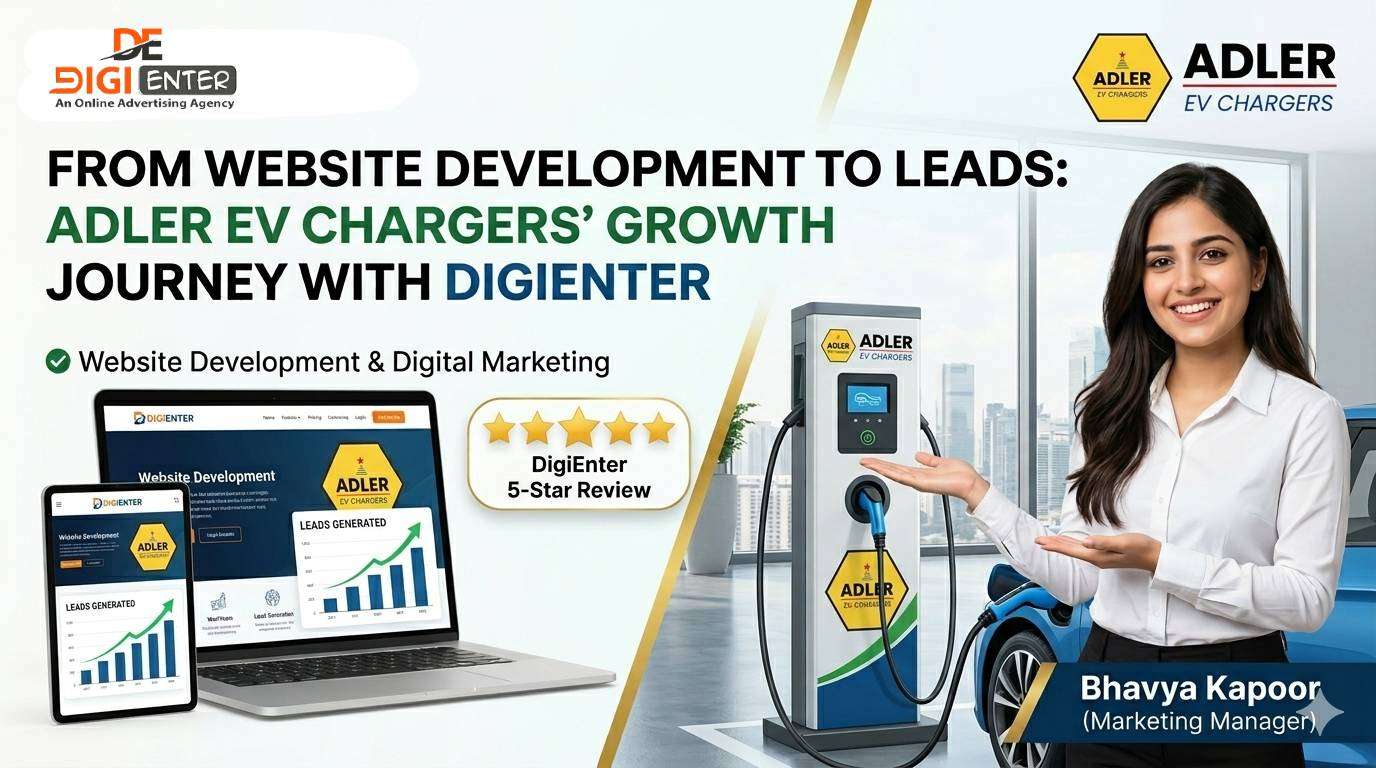
The electric vehicle (EV) revolution in India is no longer a distant dream, it is happening right now on our streets. At the forefront of this transition in North India is Adler EV Chargers Private Limited, a premier provider of EV charging infrastructure based in Ghaziabad, Uttar Pradesh.
However, in a rapidly evolving green-energy market, having a world-class product isn't enough; you need a world-class digital engine to drive it. That is where DigiEnter stepped in.
When Adler EV Chargers partnered with DigiEnter, they faced a common hurdle for high-growth technical companies: their digital presence didn't yet match the quality of their engineering.
To scale, they needed:
We didn't just build a website; we built a conversion machine. Our approach was divided into two critical phases:
Phase 1: High-Performance Website Development
We designed and developed a custom website for Adler EV Chargers with a focus on speed, SEO, and UI/UX.
Phase 2: Data-Driven Digital Marketing
Once the foundation was laid, we launched targeted digital marketing campaigns. By analyzing search intent and leveraging localized SEO, we ensured that when businesses in Uttar Pradesh looked for sustainable charging solutions, Adler EV Chargers was the first name they saw.
The synergy between Adler’s vision and DigiEnter’s execution led to a significant surge in qualified leads and brand visibility. The impact was so profound that Adler EV Chargers awarded DigiEnter a 5-star review for our services.
To celebrate this milestone, Bhavya Kapoor, the Marketing Manager at Adler EV Chargers, shared a glowing video testimonial detailing their experience working with our team.
"The results have been exceptional. DigiEnter delivered exactly what they promised."
- Bhavya Kapoor, Marketing Manager, Adler EV Chargers Private Limited
At DigiEnter, we specialize in transforming businesses into digital leaders. Whether you are in manufacturing, green energy, or professional services, we have the expertise to take you from a "website" to "consistent leads."
Ready to be our next success story?
Don't Miss: What Is Answer Engine Optimization (AEO) A Simple Guide for Beginners
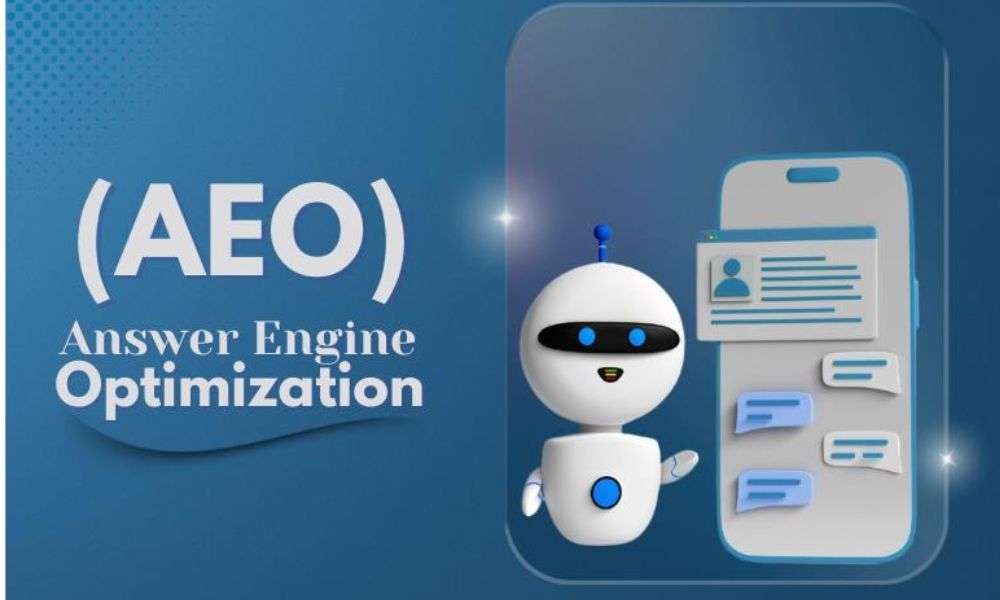
The way people search for information online is rapidly changing. Earlier, users typed keywords into search engines and clicked through multiple websites to find answers. Today, people expect instant answers. With the rise of AI assistants, voice search, and smart devices, search engines are evolving into answer engines.
This shift has introduced a new concept in digital marketing called Answer Engine Optimization (AEO). If you are a business owner, marketer, or beginner in SEO, understanding AEO is essential to stay ahead in the modern search landscape.
In this detailed guide, we will explain what AEO is, how it works, why it matters, and how beginners can optimize their content for answer engines.
Answer Engine Optimization (AEO) is the process of optimizing your content so that search engines, AI tools, and voice assistants can directly extract and display your information as an answer to user queries.
Instead of only ranking webpages in search results, answer engines try to provide immediate answers to users.
For example, when someone searches:
Search engines often show featured snippets, knowledge panels, or AI-generated answers at the top of the page. The information displayed there usually comes from well-optimized websites.
AEO helps your content become the source of those answers.
Although AEO is closely related to SEO, they are not exactly the same.
| SEO (Search Engine Optimization) | AEO (Answer Engine Optimization) |
|---|---|
| Focuses on ranking webpages in search results | Focuses on providing direct answers |
| Uses keywords and backlinks | Uses structured answers and clear information |
| Users click on links to read content | Users get answers directly on search page |
| Mainly for traditional search engines | Designed for AI assistants and voice search |
In simple words:
SEO helps your website rank, while AEO helps your content become the answer.
The importance of AEO is growing because of several changes in how people search online.
1. Rise of Voice Search
People now ask questions using voice assistants like Google Assistant, Amazon Alexa, and Apple Siri.
Voice searches are usually conversational, such as:
These assistants provide one direct answer, not a list of websites. AEO enables your content to appear as the answer users are searching for.
2. Growth of AI Search
AI-powered platforms like **Google Search with AI results and tools like ChatGPT are transforming the search experience.
Instead of clicking multiple results, users get summarized answers directly from AI systems. These answers often rely on well-structured and authoritative web content.
3. Featured Snippets Dominate Search Results
Featured snippets are quick answer sections that appear above regular search results.
For example, if you search:
Google may display a short paragraph from a website explaining SEO.
Websites optimized for AEO have a higher chance of appearing in these featured snippets.
Answer engines analyze content using advanced algorithms and AI. They try to identify:
When your content provides clear, well-structured answers, answer engines are more likely to use it.
To optimize for answer engines, your content should include several important elements.
1. Question-Based Content
Most searches today are questions.
Examples:
Creating content that answers these questions increases the chances of appearing in answer boxes.
2. Clear and Concise Answers
Answer engines prefer short and direct answers.
A good strategy is:
Example:
What is SEO?
SEO involves optimizing a website so it ranks higher in search engines. It helps websites rank higher in search results and attract organic traffic.
3. Structured Content
Well-organized content helps search engines understand your information better.
Use:
This structure makes it easier for AI systems to extract answers.
4. Schema Markup
Schema markup is a form of structured data placed in your website code to provide more information to search engines.
It helps search engines understand content like:
Using schema increases the chances of appearing in rich results and answer boxes.
5. Authority and Trust
Answer engines prefer content from credible sources.
You can build authority by:
Google evaluates content based on Experience, Expertise, Authoritativeness, and Trustworthiness (E-E-A-T).
Beginners can follow these simple steps to optimize content for answer engines.
Step 1: Identify Common Questions
Use tools like:
Example:
If your niche is digital marketing, common questions could be:
Step 2: Write Direct Answers
Always start with a clear answer paragraph before explaining the topic in detail.
This increases your chance of getting featured in answer boxes.
Step 3: Use FAQ Sections
FAQ sections are highly effective for AEO.
Example:
AEO is the process of optimizing content so that search engines can provide direct answers to user queries.
Step 4: Optimize for Voice Search
Voice searches are usually longer and conversational.
Example:
“What are the best SEO tips for beginners?”
Use natural language and conversational content.
Step 5: Improve Website Technical SEO
Technical factors also influence answer engine visibility.
Important factors include:
AEO offers several advantages for businesses and websites.
The future of search is moving toward AI-powered answers instead of traditional search results.
With advancements in artificial intelligence, answer engines will become even smarter at understanding user queries and delivering precise answers.
Businesses that adapt to AEO strategies early will have a significant advantage in online visibility.
Digital marketers are already integrating AEO with traditional SEO strategies to stay competitive.
Answer Engine Optimization (AEO) is the next evolution of search optimization. Instead of only focusing on rankings, AEO focuses on providing direct answers to user questions.
By creating clear, structured, and informative content, you can increase your chances of appearing in featured snippets, AI-generated answers, and voice search results.
For beginners, the key steps include:
As search technology continues to evolve, AEO will play a crucial role in digital marketing strategies.
If you want to succeed in the future of search, optimizing your content for answer engines is no longer optional, it is essential.
Don't Miss: Voice Search Optimization: How to Get Found in AI-Powered Search
Keyword research has always been the backbone of SEO, but in 2026, it has evolved far beyond finding high-volume keywords. Search engines are now powered by AI, user behavior is more intent-driven, and rankings depend heavily on context, topical authority, and content quality.
If you want to rank consistently, drive qualified traffic, and convert visitors into customers, you must master keyword research the professional way.
This guide explains how expert digital marketers perform keyword research in 2026, using modern tools, intent analysis, and data-backed strategies.
With AI-driven algorithms, many believe keyword research is obsolete. In reality, it has become more strategic than ever.
Keyword research in 2026 helps you:
Search engines no longer rank pages simply for keywords. They rank solutions to problems. Keyword research tells you what those problems are.
Professional keyword research starts with clarity.
Before using any tool, ask:
Search engines now evaluate whether your content fulfills a business-relevant purpose, not just informational intent.
In 2026, ranking without intent alignment leads to low engagement and poor conversions.
Every keyword falls into one of these intent categories:
Commercial Intent
Transactional Intent
Navigational Intent
Seed keywords are the foundation of your entire research process.
Sources for seed keywords:
For example, if you offer SEO services, seed keywords may include:
At this stage, focus on collecting ideas, not filtering.
Professional marketers rely on multiple tools, not just one.
In 2026, combining AI insights with real search data gives the best results.
Targeting one keyword per page is outdated.
Modern SEO focuses on topic-based keyword clustering, where a single page ranks for dozens of related keywords.
Instead of creating separate pages for:
You create one in-depth topical resource that covers everything comprehensively.
This approach:
Keyword difficulty scores alone are unreliable in 2026.
Professionals analyze:
A keyword with moderate competition but weak content is often easier to rank for than a low-difficulty keyword dominated by strong brands.
Smart marketers win by targeting high-intent, low-competition keywords.
Focus on:
For example:
Search behavior in 2026 is conversational.
Users search using:
Instead of short phrases, optimize for:
Clear, structured, conversational content performs better across AI-driven results.
Every keyword should be mapped to a purpose.
Informational keywords work best for:
Commercial keywords suit:
Transactional keywords belong on:
This ensures your SEO traffic contributes directly to business growth.
Keyword research is an ongoing process.
Regularly monitor:
Update content every few months to:
Fresh, updated content performs significantly better in competitive niches.
Avoiding these mistakes alone can dramatically improve rankings.
Digi Enter is a results-driven digital marketing company focused on helping businesses grows online with smart, data-backed strategies. We specialize in SEO, website development, Google Ads, social media marketing, and performance-driven lead generation solutions. Our approach combines deep market research, advanced tools, and creative execution to deliver measurable growth, not just traffic.
Whether you are a startup, local business, or established brand, Digi Enter creates customized digital strategies aligned with your business goals. With a strong focus on transparency, ROI, and long-term success, we help brands build visibility, authority, and sustainable online presence.
In 2026, keyword research is no longer a basic SEO task. It is a strategic process that drives visibility, authority, and revenue.
To do keyword research like a pro:
When done correctly, keyword research becomes the foundation of long-term SEO success.
Don't Miss: How Large Language Models (LLMs) Are Transforming SEO Content Creation
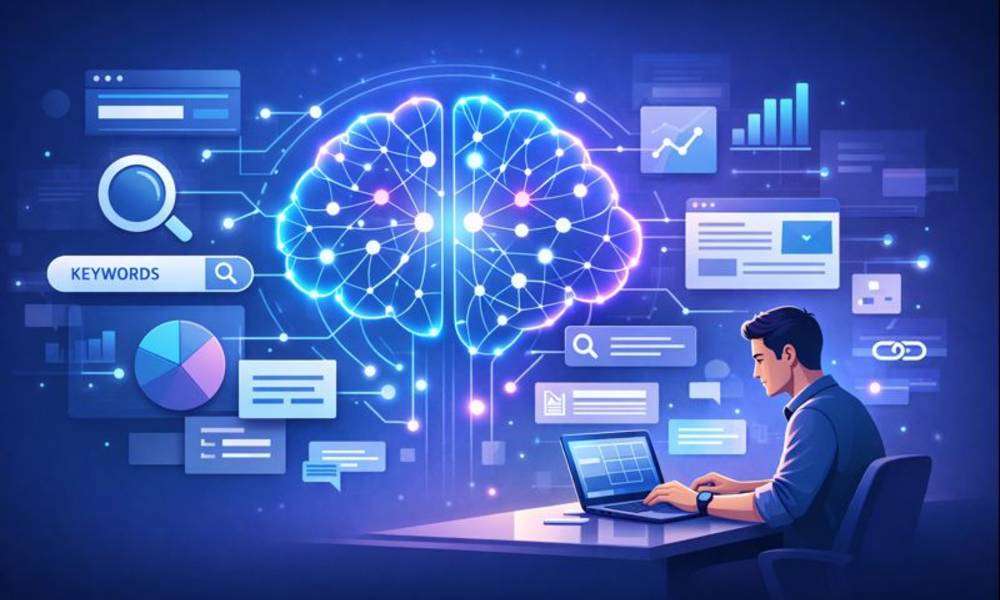
In the constantly evolving world of digital marketing, one of the most transformative technologies in recent years has been Large Language Models (LLMs). From revolutionizing how we write content to redefining how search engines interpret language, LLMs like OpenAI’s GPT-4, GPT-4.5, and beyond are reshaping the SEO landscape. As content creators and digital marketers, we are witnessing an unprecedented shift in what’s possible; and if you’re not adapting, you risk falling behind.
In this comprehensive blog post, we’ll explore how LLMs are transforming SEO content creation, what it means for marketers, and how you can leverage this technology to improve rankings, boost traffic, and deliver better user experiences.
Large Language Models are advanced AI systems trained on massive datasets of text from the internet, books, and other sources. These models learn patterns in language; grammar, context, style, and meaning; allowing them to generate coherent, human-like text in response to prompts.
LLMs are not simple autocomplete tools. They can:
In SEO content creation, these capabilities are game-changing.
SEO (Search Engine Optimization) continues to revolve around high-quality, relevant, and user-centric content. Google and other major search engines strive to deliver the best possible results for every query; which means content must be:
LLMs help marketers achieve all of the above; faster and more efficiently than traditional content creation workflows.
Traditionally, writing SEO content requires extensive research, drafting, editing, and optimization. For long-form articles (2,000+ words), this can take multiple hours or even days.
LLMs change that:
One of the greatest SEO challenges is identifying the right keywords; and ensuring content covers not just primary terms but also semantically related phrases.
With LLMs, you can:
For example, instead of just targeting “best running shoes,” LLMs can help you capture related intents like:
This ensures your content satisfies not only keyword signals but also user intent signals — which search engines increasingly prioritize.
Today’s SEO is less about keyword density and more about solving user problems.
Search engines like Google now use advanced understanding models (e.g., BERT, MUM) to interpret what users mean - not just what they type. This makes semantic relevance and contextual depth more important than ever.
LLMs excel at generating content that aligns with user intent. You can prompt an LLM to:
This means your content not only ranks better - it actually satisfies searcher needs.
LLMs can assist with:
Instead of manually writing these elements one by one, you can use prompts like:
“Generate SEO meta title and description for an article about ‘Top DSLR Cameras in 2026’ optimized for high click-through rates.”
Within seconds, an LLM can produce options you can refine and publish.
LLMs help ensure your content is readable and inclusive. They can:
This enhances user experience; factors that search engines increasingly weigh through engagement metrics like time on page and bounce rate.
One of the most powerful and forward-thinking applications of LLMs lies in content ideation, where they help uncover fresh topics, identify content gaps, and spark ideas that might otherwise be overlooked. Instead of staring at a blank page or relying solely on keyword tools, you can prompt an LLM to:
For instance:
“Analyze competitor articles ranking for ‘solar panel installation guide’ and identify 10 subtopics they missed.”
The AI can help uncover ideas that might otherwise go unnoticed — giving you an edge in topical authority.
While LLMs are powerful, they’re not infallible. To maximize results:
Let’s illustrate with a hypothetical example:
Traditional Workflow:
LLM-Assisted Workflow:
Result:
This efficiency allows agencies to produce more content without compromising quality; a key advantage in competitive niches.
As we move forward, the integration of LLMs with search and content systems will only deepen. Here are some trends to watch:
Digi Enter is a results-driven digital marketing agency built to help brands grow online with clarity and confidence. We blend strategy, creativity, and data to deliver SEO, performance ads, content marketing, social media, and conversion-focused websites that actually convert. Our team focuses on user intent, search visibility, and measurable ROI; no fluff, just impact.
From startups to scaling businesses, Digi Enter partners closely with clients to craft tailored growth plans, optimize every touch point, and turn traffic into revenue. If you want smarter marketing, transparent reporting, and sustainable growth, Digi Enter is your growth partner across industries and markets worldwide with excellence.
Large Language Models are changing the game for SEO content creation. They empower marketers to produce high-quality content at scale, understand user intent more deeply, and optimize for search engines more intelligently. When used responsibly; with human oversight and strategic thinking; LLMs elevate your content from generic to impactful.
Whether you’re a freelance writer, in-house marketer, or digital agency leader, embracing LLMs will be essential for staying competitive in 2026 and beyond.
Your Turn: How Are You Using LLMs in Your SEO Strategy?
Leave a comment below; I’d love to hear your experiences, tips, and questions!
Don't Miss: How Small Businesses Can Compete with Big Brands Using Digital Marketing?
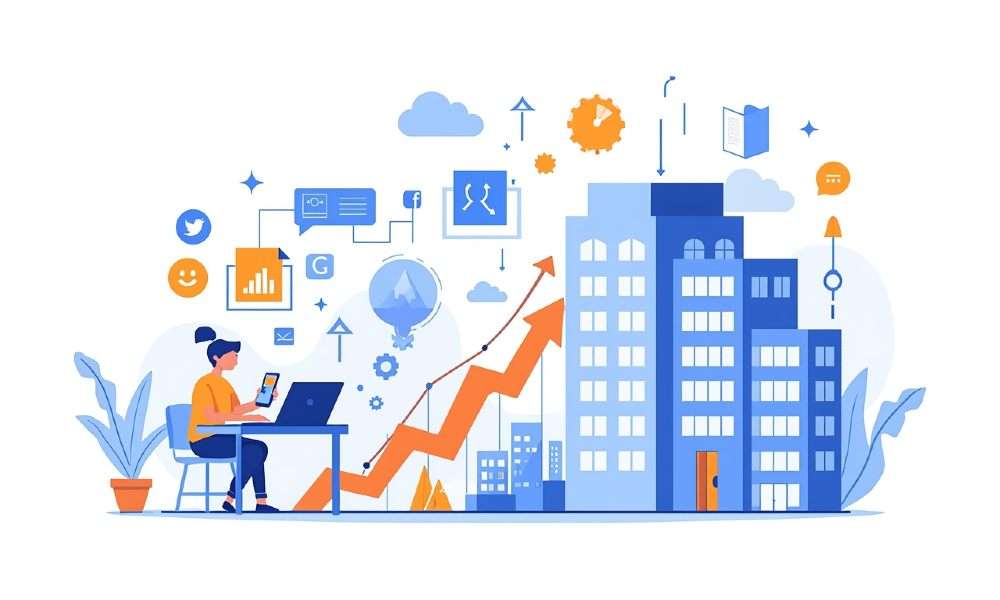
For decades, big brands dominated the market simply because they had money, manpower, and visibility. A television ad, newspaper spreads, hoardings; small businesses couldn’t even dream of competing at that level. But digital marketing has completely transformed how the game is played.
Today, a small business with the right digital strategy can stand shoulder to shoulder with multinational brands; and in many cases, even outperform them. The secret isn’t budget. It’s strategy, consistency, and understanding your audience better than anyone else.
Let’s explore how small businesses can effectively compete with big brands using digital marketing.
Digital marketing doesn’t reward size; it rewards relevance.
Search engines, social media platforms, and ad networks care about:
A local business with helpful content and strong customer relationships can outrank a big brand that’s less focused on personalization. Unlike traditional marketing, you don’t need crores of rupees to get noticed; you need clarity and execution.
Big brands try to appeal to everyone. Small businesses win by focusing on one specific audience.
Instead of saying:
“We provide digital marketing services.”
Say:
“We help local businesses in Gujarat generate leads using Google Ads and SEO.”
When you narrow your niche:
Niche marketing allows you to become an expert instead of just another option.
Big brands may have authority, but they often struggle with local intent. This is where small businesses dominate.
How to win with Local SEO:
When someone searches “near me” or includes a city name, Google prefers relevant local businesses over national giants.
Big brands often sound corporate. Small businesses can sound human—and that’s a massive advantage.
Blog posts, videos, and social media content allow you to:
Examples of powerful content ideas:
Authentic storytelling builds trust; something money can’t buy.
Big brands focus on polished visuals and corporate messaging. Small businesses win by being relatable and real.
On platforms like Instagram, Facebook, and LinkedIn:
People don’t want conversations with a logo; they want to connect with real people.
Consistency matters more than perfection. Posting regularly with genuine intent beats occasional high-budget campaigns.
You don’t need massive ad spend; you need smart targeting.
Big brands often waste money targeting broad audiences. Small businesses can:
Platforms like Google Ads and Meta Ads allow you to control every rupee. Even a small daily budget can generate leads if the message is right.
Big brands rely on automation. Small businesses can rely on personal touch.
Simple actions make a huge difference:
Customers value businesses that listen, not just sell. When people feel valued, they become loyal—and loyal customers are your strongest marketing asset.
People trust people more than brands.
Encourage happy customers to:
Display these reviews everywhere:
Big brands may have recognition, but real reviews build faster trust.
Digital marketing gives small businesses something traditional marketing never could—real-time data.
Track:
This allows you to:
Big brands move slowly due to layers of approval. Small businesses can adapt instantly; and speed is a competitive edge.
The biggest mistake small businesses make is giving up too soon.
Digital marketing is not magic; it’s momentum.
Results come from:
Big brands didn’t win overnight. Small businesses that stay consistent eventually build authority, trust, and visibility.
Digi Enter is a results-driven digital marketing company dedicated to helping businesses grow online with smart, affordable strategies. We focus on website development, SEO, Google Ads, social media marketing, and lead generation solutions designed specifically for small and growing brands.
At Digi Enter, we believe digital success comes from understanding your audience, creating meaningful content, and using data to drive decisions. Whether you’re a local business or an emerging brand, our goal is to increase your visibility, generate quality leads, and build long-term online growth. Digi Enter is where strategy meets creativity to deliver real digital results.
Competing with big brands doesn’t mean copying them. It means doing what they can’t:
Digital marketing has removed the entry barriers and handed power to those who use it wisely. With the right strategy, small businesses can not only compete; but thrive.
In today’s digital world, clarity beats capital, and authenticity beats advertising.
If you’re a small business owner, remember this:
You don’t need to be bigger. You need to be better; for your audience.
Don't Miss: How Does Responsive Web Design Improve SEO Rankings?
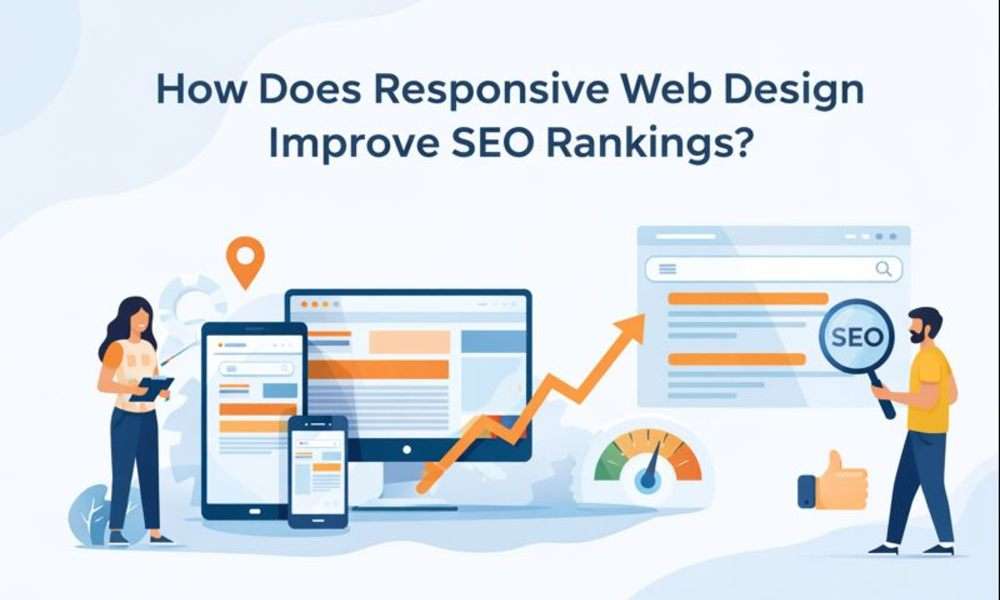
In today’s digital-first world, having a visually appealing website is no longer enough. Your website must perform seamlessly across all devices; desktops, tablets, and smartphones; to stay competitive. This is where Responsive Web Design (RWD) plays a crucial role. Beyond enhancing user experience, responsive web design has a direct and significant impact on SEO rankings.
Search engines like Google prioritize websites that deliver consistent, fast, and user-friendly experiences. In this blog, we’ll explore what responsive web design is, how it works, and why it’s essential for improving SEO rankings.
Responsive Web Design is a web development approach where a website’s layout, content, images, and functionality automatically adapt to different screen sizes and devices. Instead of creating separate websites for desktop and mobile users, a single responsive website adjusts itself dynamically using:
This ensures users get an optimal browsing experience regardless of the device they use.
Google has clearly stated that user experience directly influences search rankings. Since 2015, Google’s mobile-friendly update and later the Mobile-First Indexing policy confirm that Google primarily uses the mobile version of a website for indexing and ranking.
Responsive design aligns perfectly with Google’s guidelines because it:
Let’s break down the key ways responsive web design positively impacts SEO.
1. Mobile-First Indexing Advantage
Google primarily indexes and ranks websites using their mobile version. If your site is not mobile-friendly, your rankings can suffer, even for desktop searches.
Responsive web design ensures:
A responsive website meets Google’s mobile-first requirements, leading to higher visibility in search results.
2. Improved User Experience (UX)
User experience is at the heart of SEO. Metrics such as bounce rate, dwell time, and pages per session directly influence rankings.
Responsive design improves UX by:
When users enjoy browsing your site, they stay longer, sending positive engagement signals to Google, which boosts rankings.
3. Faster Page Load Speed
Page speed is an officially recognized ranking factor for desktop and mobile search results. A well-implemented responsive website loads faster because:
Faster websites lead to:
Google’s Core Web Vitals heavily emphasize loading performance, which responsive design supports effectively.
4. Lower Bounce Rate
Bounce rate measures how many users leave your website without interacting further. Non-responsive websites often frustrate mobile users, causing them to leave immediately.
Responsive design helps by:
A lower bounce rate indicates content relevance and usability; both strong signals for better SEO rankings.
5. Single URL Structure (No Duplicate Content)
One of the biggest SEO benefits of responsive web design is the single URL approach. Instead of maintaining separate desktop and mobile websites, responsive sites use one URL for all devices.
SEO benefits include:
All SEO authority, backlinks, and social shares point to a single URL, strengthening domain authority and ranking power.
6. Better Crawl Efficiency
Search engine bots have a crawl budget; meaning they can only crawl a limited number of pages per visit. Responsive websites make crawling more efficient because:
This allows search engines to index your site faster and more accurately, improving overall SEO performance.
7. Enhanced Local SEO Performance
Most local searches are conducted on mobile devices, such as:
This is especially important for businesses targeting specific cities or regions.
8. Improved Social Sharing and Traffic
Social media traffic largely comes from mobile devices. A responsive website ensures that users clicking your shared links experience a seamless interface.
Benefits include:
All these factors indirectly contribute to improved SEO rankings.
9. Higher Conversion Rates
While conversions are not a direct ranking factor, they strongly influence user behavior metrics. Responsive design improves conversions by:
Better engagement and satisfaction lead to stronger SEO signals.
10. Future-Proof SEO Strategy
Responsive web design is adaptable to new devices and screen sizes, such as foldable phones and large tablets. This makes your website future-ready without frequent redesigns.
Search engines favor websites that:
| Feature | Responsive Design | Separate Mobile Site |
|---|---|---|
| SEO Friendly | Yes | Risk of duplication |
| URL Structure | Single URL | Multiple URLs |
| Maintenance | Easy | Complex |
| Page Speed | Optimized | Often slower |
| Google Recommendation | Yes | No |
Google officially recommends responsive web design over separate mobile sites.
To fully leverage responsive design for SEO, follow these best practices:
Digi Enter offers professional responsive website designing services in Delhi, helping businesses create fast, user-friendly, and SEO-optimized websites. Our designs adapt seamlessly across desktops, tablets, and mobile devices to deliver an exceptional user experience.
We focus on modern layouts, clean code, and mobile-first design principles to improve engagement, reduce bounce rates, and boost search rankings.
Whether you need a business website, landing page, or eCommerce platform, our expert team ensures your website looks great and performs flawlessly on every screen. Partner with Digi Enter to build a responsive website that drives traffic, leads, and long-term growth.
Responsive web design is no longer optional; it’s a core SEO requirement. From mobile-first indexing and improved user experience to faster page speed and better crawlability, responsive design directly impacts search engine rankings.
If you want to:
Then investing in responsive web design is essential.
A responsive website doesn’t just look good, it performs better, ranks higher, and converts more.
Don't Miss: What is the 70/20/10 Rule in Digital Marketing?
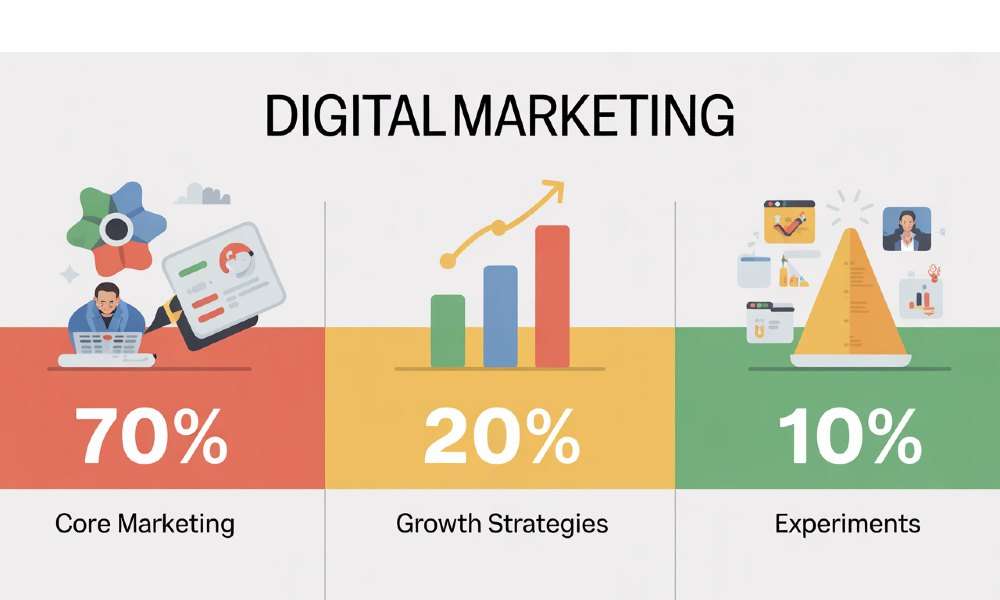
In today’s fast-changing digital landscape, marketers face a constant challenge: how to balance proven strategies with innovation while still leaving room for experimentation. Focusing only on what already works can slow growth, but chasing every new trend can waste budget and effort. This is where the 70/20/10 Rule in Digital Marketing becomes a powerful framework.
The 70/20/10 rule helps businesses allocate time, budget, and resources effectively across safe, growth-oriented, and experimental marketing activities. It creates a balanced strategy that supports steady performance while encouraging innovation.
Let’s explore what this rule means, how it works, and how you can apply it to your digital marketing strategy.
The 70/20/10 rule divides your marketing efforts into three categories:
This structure ensures that most of your resources go into strategies that already deliver results, while still allowing space for improvement and innovation.
The largest portion of your marketing budget and effort, 70%—should be spent on proven strategies that consistently deliver leads, traffic, or sales.
These are your core digital marketing channels and tactics that already perform well.
Examples of 70% Activities:
Why This Matters:
These activities keep your business running and generating consistent results. Cutting back on them to chase trends can hurt your revenue. The 70% portion ensures business stability and predictable growth.
Best Practices:
The 20% portion is dedicated to growth-oriented strategies that build upon what already works but push it further. These efforts involve improvement, optimization, and moderate risk.
Examples of 20% Activities:
Why This Matters:
These strategies help you grow without completely stepping into the unknown. They’re based on data and existing success but aim to reach new audiences or increase engagement.
Best Practices:
The final 10% is reserved for experimental marketing efforts. These are high-risk but potentially high-reward activities that can unlock new opportunities.
Examples of 10% Activities:
Why This Matters:
If you never experiment, your brand risks becoming outdated. Many successful marketing channels started as experiments. The 10% rule protects your business from excessive risk while allowing innovation.
Best Practices:
1. Reduces Risk: Most of your budget stays in reliable channels, protecting your overall performance while still allowing innovation.
2. Encourages Continuous Improvement: The 20% growth category forces you to optimize and refine your strategies regularly instead of remaining stagnant.
3. Promotes Innovation: The 10% experimentation budget keeps your brand future-ready and competitive in evolving digital markets.
4. Improves Resource Allocation: Teams can plan better when priorities are clearly defined, leading to efficient time and budget usage.
5. Supports Long-Term Scalability: You build stability, growth, and innovation simultaneously rather than focusing on only one area.
SEO Strategy
Paid Advertising
Content Marketing
Social Media Marketing
Example: 70/20/10 Rule for a Small Business
Suppose a business has a monthly marketing budget of ?1,00,000.
Spending Too Much on Experiments: Over-investing in risky ideas can drain budgets quickly. Stick to the 10% limit.
While highly effective, the 70/20/10 rule should be adapted based on:
For example:
The key idea is balance, not blind experimentation or over-dependence on old strategies.
The 70/20/10 rules in digital marketing offers a smart and practical framework for balancing stability, growth, and innovation. It ensures your business continues to benefit from proven methods while consistently improving and preparing for future opportunities.
By allocating resources strategically:
This approach keeps your marketing efforts agile, data-driven, and future-ready.
If you’re planning your next marketing budget or campaign strategy, applying the 70/20/10 rule can help you achieve sustainable digital growth without unnecessary risk.
Dont Miss: Voice Search Optimization: How to Get Found in AI-Powered Search
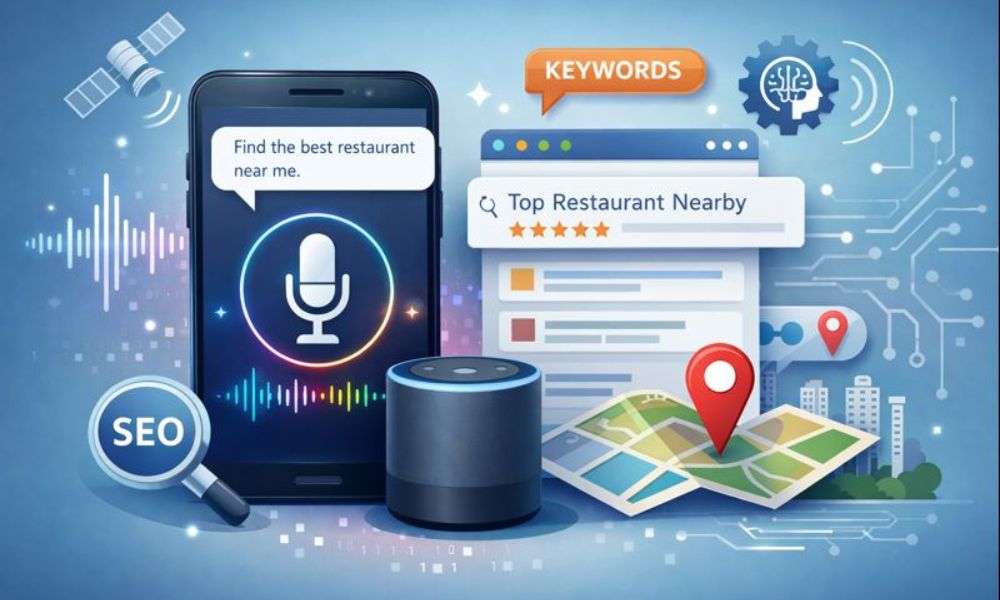
Voice search has quietly become a normal part of everyday life. People ask their phones for directions, request nearby services from smart assistants, and search for answers without typing a single word. With AI-powered tools like Google Assistant, Siri, and Alexa becoming smarter, voice search is changing how search engines deliver results, and how businesses need to approach SEO.
If you want your website to stay visible and competitive, understanding voice search optimization is no longer optional. This guide explains what voice search optimization is, why it matters, and how you can start improving your chances of being found in AI-powered search results.
Voice search optimization is the process of improving your website and content so it appears in search results when users perform voice-based searches. These searches are spoken, conversational, and usually longer than traditional text-based queries.
For example:
Voice search queries sound like real questions asked in everyday language. Search engines use artificial intelligence and natural language processing to understand the intent behind these queries and deliver the most relevant answer, often just one.
Voice search is growing rapidly due to mobile usage, smart speakers, and improved AI capabilities. Ignoring it can limit your online reach.
Here’s why voice search optimization is important:
Voice search doesn’t replace traditional SEO, but it reshapes how content should be written and structured.
AI-powered search engines aim to provide the best possible answer in the shortest time. Instead of showing multiple results, voice assistants often read one response aloud.
They analyze factors such as:
This means your content must be precise, well-structured, and easy to understand.
Voice searches are conversational. People speak differently than they type, and your content should reflect that.
How to optimize keywords for voice search:
Examples of voice-friendly keywords:
Adding these types of phrases makes your content more relevant for voice-based queries.
Most voice searches are questions. If your content answers those questions clearly, you improve your chances of being selected by AI assistants.
Best practices:
Clear answers help search engines understand your content and use it as a voice response.
Featured snippets are short answers displayed at the top of Google search results. Voice assistants often read these snippets aloud.
How to optimize for featured snippets:
When your content appears as a featured snippet, it significantly increases voice search visibility.
Many voice searches are driven by local intent. People often use voice search to find nearby services.
Examples include:
Steps to improve local voice search visibility:
Local SEO plays a critical role in voice search success, especially for service-based businesses.
Voice search users expect fast results. Slow websites are less likely to be recommended by AI assistants.
Make sure your website:
A fast and mobile-friendly site improves both user experience and search rankings.
AI prefers content that is clearly structured and easy to interpret.
Content structure tips:
Well-organized content helps AI tools extract the right information quickly.
One of the biggest mistakes businesses make is writing content that sounds robotic. Voice search favors content that sounds natural when read aloud.
Instead of formal or technical language, aim for a friendly and conversational tone. Imagine explaining your service to a customer face-to-face and write the same way.
Natural language builds trust with both users and search engines.
Schema markup is a form of structured data that helps search engines understand your content better. While it’s not mandatory, it can improve voice search performance.
Schema is useful for:
When search engines understand your content clearly, they are more likely to use it in voice responses.
Avoid these common errors that limit voice search visibility:
Fixing these issues can quickly improve performance in AI-powered search.
Digi Enter offers professional voice search optimization services in Delhi to help businesses get discovered in AI-powered search results. We optimize your website with conversational keywords, local SEO strategies, and question-based content that matches how people actually search using voice assistants.
Our approach improves visibility on Google Assistant, Siri, and Alexa, helping your brand appear as the most relevant answer for local and service-based voice queries.
Voice search optimization is about aligning your content with how people naturally speak and search. As AI-powered assistants become more advanced, search results will become more precise and competitive.
By focusing on conversational keywords, clear answers, local SEO, mobile performance, and structured content, you make it easier for AI to choose your website as the best response.
The future of search is not just about ranking, it’s about being the answer. By optimizing for voice search today, you position your business to stay visible, relevant, and trusted in the evolving world of AI-powered search.
Don't Miss: LLMs in Search Engines: How They Affect Rankings and Snippets
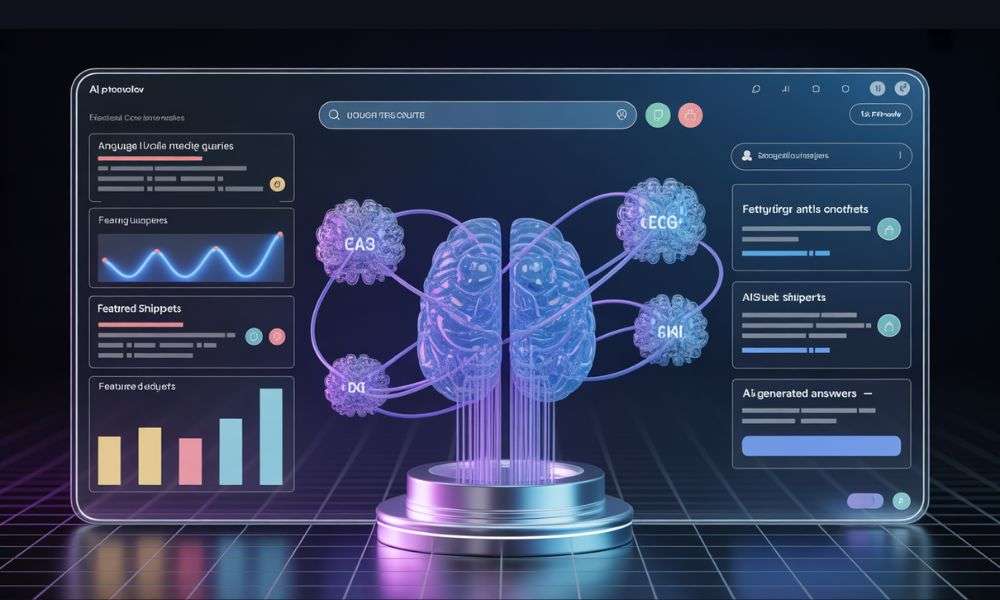
Search engines are undergoing the biggest transformation since the introduction of mobile-first indexing. Large Language Models (LLMs) such as Google’s Gemini, OpenAI-based systems, and Bing’s AI-powered search are reshaping how search results are generated, ranked, and displayed. For businesses, marketers, and SEO professionals, understanding how LLMs influence rankings and snippets is no longer optional, it’s essential.
This blog explores what LLMs are, how search engines use them, and what changes they bring to rankings, featured snippets, and overall search visibility.
Large Language Models (LLMs) are advanced AI systems trained on massive datasets of text. They understand language contextually rather than relying only on keywords. Unlike traditional algorithms that matched exact phrases, LLMs analyze intent, meaning, relationships, and natural language patterns.
Search engines use LLMs to:
This shift moves search from keyword-matching to intent-matching.
1. From Keywords to Search Intent
Traditional SEO focused heavily on exact keywords. LLMs prioritize search intent instead. This means:
For example, a page optimized only for “best solar panels price” may lose ranking to a page that explains pricing factors, subsidies, installation costs, and comparisons in detail.
2. Content Depth and Topical Authority Matter More
LLMs favor content that demonstrates expertise and completeness. Thin pages targeting one keyword struggle against comprehensive resources covering:
Websites that build topical authority, multiple high-quality articles around one subject, benefit significantly.
3. User Engagement Signals Gain Importance
LLMs analyze behavioral data to refine rankings, including:
If users quickly leave a page, it signals poor relevance, even if keywords match. Well-structured, readable, and engaging content performs better.
1. Rise of AI-Generated Snippets
Search engines now generate:
Instead of pulling one exact paragraph, LLMs may synthesize information from multiple sources. This reduces visibility for low-quality or duplicate content.
2. Structured Content Wins Snippets
To be selected as a source:
Pages that “get to the point” have a higher chance of influencing AI-generated answers.
3. Zero-Click Searches Increase
LLMs often answer queries directly on the search page. While this can reduce clicks, it increases:
Being referenced in AI snippets still provides indirect SEO value.
LLMs assess content beyond traditional SEO metrics. They evaluate:
1. Contextual Relevance: Content must align fully with the query’s meaning, not just keywords.
2. Language Naturalness: Human-like writing outperforms robotic, over-optimized text.
3. Accuracy and Consistency: Contradictory or outdated information reduces trustworthiness.
4. E-E-A-T Signals: Experience, Expertise, Authoritativeness, and Trustworthiness remain crucial—especially for finance, health, and service-based industries.
LLMs are significantly improving local search accuracy. They analyze:
For local businesses, generic service pages are no longer enough. Content must mention:
1. Write for Humans First: Avoid keyword stuffing. Use natural language that answers real user questions.
2. Build Topic Clusters: Create pillar pages supported by related blogs to establish authority.
3. Optimize for Conversational Queries: Include long-tail and question-based phrases users speak or type naturally.
4. Use Clear Structure: Headings, bullet points, and summaries help LLMs understand content faster.
5. Keep Content Fresh: Update statistics, trends, and examples regularly to maintain relevance.
Writing shallow content targeting single keywords
LLMs can easily detect low-value or repetitive content.
Search engines are evolving into answer engines. Rankings will increasingly depend on:
SEO will not disappear, but it will become more aligned with content strategy, UX, and brand trust.
LLMs are redefining how search engines rank pages and generate snippets. Success in this new era requires moving beyond traditional SEO tactics and focusing on helpful, authoritative, and well-structured content.
Websites that genuinely solve user problems will not only rank higher but also become trusted sources for AI-powered search results.
If your SEO strategy still revolves around keywords alone, it’s time to adapt, because LLMs are shaping the future of search, and they reward quality over shortcuts.
Don't Miss: 4 Pillars of Digital Marketing for Brand Success
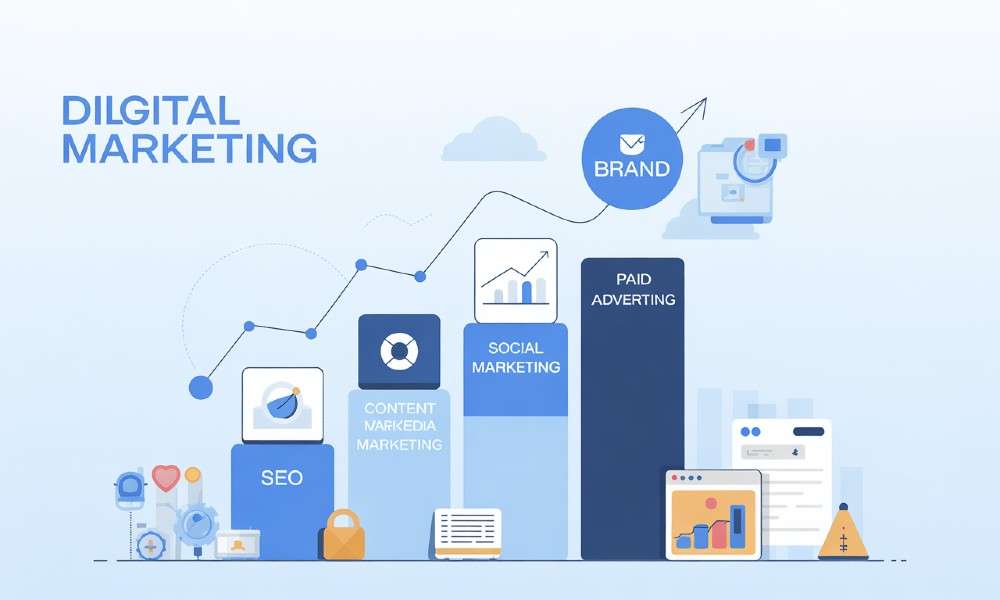
In today’s highly competitive digital landscape, businesses cannot rely on a single marketing channel to grow their brand. Consumers interact with brands across multiple platforms, search engines, social media, websites, and email, before making a purchase decision. To achieve long-term success, businesses need a strong, well-structured digital marketing strategy built on core foundations.
These foundations are commonly referred to as the four pillars of digital marketing. When implemented correctly, they work together to improve brand visibility, attract the right audience, and convert prospects into loyal customers.
This blog explores the four pillars of digital marketing for brand success, explains their importance, and shows how businesses can leverage them effectively.
Search Engine Optimization (SEO) is the backbone of digital marketing. It is aimed at enhancing a website’s presence across major search platforms, including Google, Bing, and other popular search engines. When potential customers search for products or services online, SEO ensures your brand appears at the top of search results.
Why SEO Is Important for Brand Success
SEO helps businesses:
Unlike paid ads, SEO provides long-term results. A properly optimized website can deliver consistent traffic and lead generation over an extended period.
Key Components of SEO
Effective SEO includes multiple elements:
By focusing on SEO, brands position themselves as reliable sources of information and solutions, which plays a crucial role in building long-term customer trust.
Content marketing is the heart of digital marketing. It centers on producing and sharing meaningful, relevant, and consistent content that captures the attention of a specific audience. Content educates users, answers their questions, and guides them through the buyer’s journey.
Role of Content Marketing in Brand Building
Strong content marketing helps brands:
Consumers prefer brands that provide helpful information rather than direct sales messages. High-quality content creates a connection between the brand and its audience.
Types of Content Used in Digital Marketing
Content can be delivered in many formats, such as:
Consistent and informative content ensures your brand stays relevant and top-of-mind for your audience.
Social media marketing focuses on building a brand’s presence on platforms such as Facebook, Instagram, LinkedIn, Twitter, and YouTube. It allows brands to connect directly with their audience, share content, and promote products or services.
Why Social Media Is a Core Digital Marketing Pillar
Social media marketing enables businesses to:
With billions of users worldwide, social media platforms offer unmatched reach and targeting options.
Key Social Media Marketing Strategies
Successful social media marketing includes:
Social media humanizes a brand by showcasing its personality, values, and customer interactions.
Paid advertising, also known as Pay-Per-Click (PPC) or performance marketing, delivers immediate results by placing ads in front of a targeted audience. Platforms like Google Ads, Facebook Ads, Instagram Ads, and LinkedIn Ads allow brands to reach users based on demographics, interests, behavior, and search intent.
Importance of Paid Advertising for Brand Growth
Paid advertising helps businesses:
While SEO and content take time, paid ads provide faster outcomes and measurable ROI.
Types of Paid Advertising Channels
Popular paid advertising formats include:
When combined with strong landing pages and conversion tracking, paid advertising becomes a powerful revenue-driving tool.
The true power of digital marketing lies in integrating all four pillars into a unified strategy.
For example, a blog optimized for SEO can be promoted on social media and boosted with paid ads to reach a wider audience. This multi-channel approach ensures consistent brand messaging and maximum impact.
The four pillars of digital marketing, SEO, content marketing, social media marketing, and paid advertising, are essential for building a successful and sustainable brand. Each pillar serves a unique purpose, but together they create a powerful marketing ecosystem.
Businesses that invest in all four pillars gain better visibility, stronger customer engagement, and higher conversion rates. In an ever-evolving digital world, brands that adapt and optimize these pillars will stay ahead of the competition and achieve long-term success.
If your goal is to grow your brand online, focusing on these four digital marketing pillars is not optional, it’s essential.
Don't Miss: What Is Search Intent and Why It’s Crucial for SEO Success?
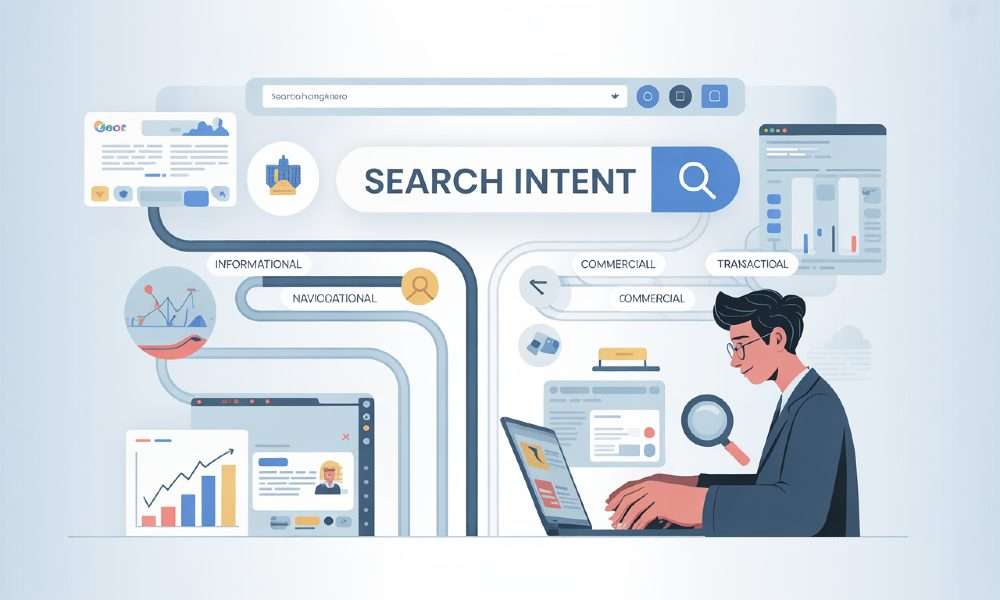
Search engine optimization (SEO) has progressed well beyond simple keyword placement and backlink building. Today, understanding search intent is the foundation of ranking, conversions, and long-term organic growth. If your content doesn’t match what users actually want, Google won’t rank it, no matter how well it’s optimized.
In this guide, we’ll explain what search intent are, its types, real examples, and why it’s critical for SEO success in 2025 and beyond.
Search intent refers to the underlying purpose behind a user’s search query. It answers the question:
“What is the user actually trying to achieve?”
When someone types a query into Google, they may want:
Google’s goal is to deliver results that best satisfy that intent, not just match keywords.
In earlier SEO days, ranking was about keyword repetition. Today, Google uses:
If your page targets the wrong intent:
Matching intent = higher rankings, better engagement, more conversions.
1. Informational Intent
The user wants to learn something.
Examples:
Best content formats:
SEO Tip: Use headings, bullet points, schema, and simple language for featured snippets.
2. Navigational Intent
The user intends to access a specific brand or website.
Examples:
Best content formats:
SEO Tip: Ensure your brand name, meta titles, and sitelinks are optimized.
3. Commercial Investigation Intent
The user is researching before buying.
Examples:
Best content formats:
SEO Tip: Include pros & cons, pricing ranges, testimonials, and internal links to services.
4. Transactional Intent
The user is ready to take action.
Examples:
Best content formats:
SEO Tip: Add strong CTAs, trust signals, contact buttons, and fast-loading pages.
Google analyzes:
Location and device
Pro tip: Always search your target keyword on Google and study:
That SERP defines the intent.
Here’s how aligning intent improves SEO performance:
| SEO Factor | Impact of Matching Intent |
| CTR | Higher |
| Bounce Rate | Lower |
| Dwell Time | Longer |
| Conversions | Increased |
| Google Rankings | Improved |
Google rewards content that solves the user’s problem completely.
Step 1: Analyze the Keyword
Check:
Step 2: Map Keywords to Intent
Create separate pages for:
Step 3: Match Content Format
If top results are:
Step 4: Optimize for AEO & GEO
With AI search engines and generative results, content must:
Search intent is now the bridge between SEO, AEO, and GEO.
If your content answers the right question the right way, AI engines will surface it.
? Targeting transactional keywords with blogs
? Writing long articles for “buy now” searches
? Ignoring local intent (“near me”, city-based)
? Keyword stuffing without solving the problem
Search intent is no longer optional; it’s the core of SEO success.
You must stop optimizing for keywords alone and start optimizing for user intent.
SEO success = Right intent + Right content + Right optimization
Don't Miss: Conversion Funnel Optimization 5 Simple Ways to Boost Sales
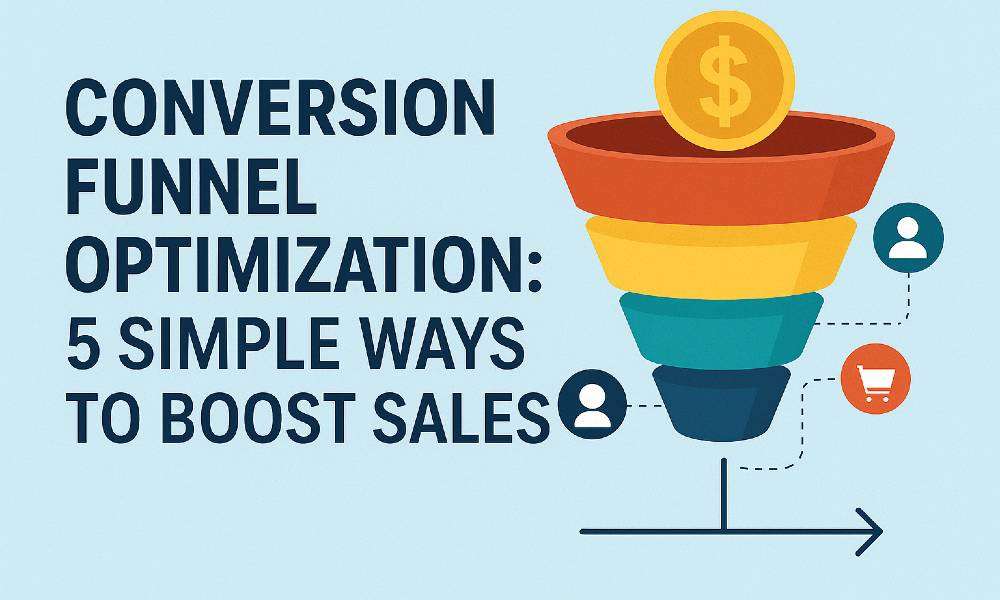
Every successful business relies on an effective conversion funnel, your customer’s journey from discovering your brand to making a purchase. But even small leaks in this funnel can lead to massive losses in revenue. If you’ve been getting traffic but not enough conversions, it’s time to focus on conversion funnel optimization.
Optimizing your funnel doesn’t require complicated tools or expert-level skills. Even simple improvements can significantly increase leads, sales, and ROI. In this blog, we’ll break down the five easiest ways to optimize your conversion funnel and boost your sales.
A conversion funnel is the step-by-step path users follow before making a purchase. It usually includes:
Each stage must be smooth, clear, and optimized. The more friction you eliminate, the more sales you generate.
Below are the most practical and effective strategies you can apply immediately.
1. Improve Your Landing Pages for Higher Engagement
Your landing page makes the first impression: and it decides whether a visitor stays or bounces.
Steps to optimize your landing pages:
Why this works:
When users instantly understand your value, they are more likely to move to the next stage in the funnel.
Not everyone converts in their first visit. In fact, 90% of users leave without taking action.
Retargeting ads help bring those users back.
How retargeting boosts your funnel:
Where you can retarget:
Pro Tip:
Segment your retargeting audience:
Retargeting ensures no potential customer slips away.
One of the biggest funnel leaks happens at the final stage, checkout or lead submission.
Fix these common problems:
Simple optimization ideas:
Show progress indicators (“Step 2 of 3”)
Why this works:
Reducing friction directly improves the conversion rate at the bottom of the funnel.
Social proof builds trust, and trust converts.
When users see others buying or recommending your product, they feel more confident.
Types of social proof to add:
Where to place social proof:
Why this works:
People follow people. When they see proof that your product works, hesitation disappears.
Not every lead is ready to buy immediately. That’s why automation is key to nurturing them through the funnel.
Set up these automated flows:
Why automation boosts sales:
Pro Tip: Use personalization, address customers by name and send relevant messages based on behavior.
You can’t optimize what you don’t measure.
Use tools like:
Track:
This helps you identify bottlenecks and fix them quickly.
Digi Enter is a leading digital marketing agency committed to helping businesses grow with smart, result-driven online strategies. Specializing in SEO, Google Ads, Social Media Marketing, Website Development, and Content Creation, Digi Enter focuses on delivering measurable results that boost visibility, traffic, and conversions. With a team of experienced professionals, the agency combines creativity, technology, and data-driven insights to build powerful digital campaigns tailored to each client’s goals. Whether you’re a startup or an established brand, Digi Enter ensures your business achieves maximum online impact with cost-effective and performance-focused marketing solutions.
Conversion Funnel Optimization doesn’t have to be complex. By applying just these five simple but powerful techniques, you can dramatically increase your conversions and boost your overall sales:
A well-optimized funnel ensures that every visitor, and every rupee you spend on marketing, delivers maximum ROI.
Don't Miss: AEO vs SEO: What’s the Difference and Why It Matters
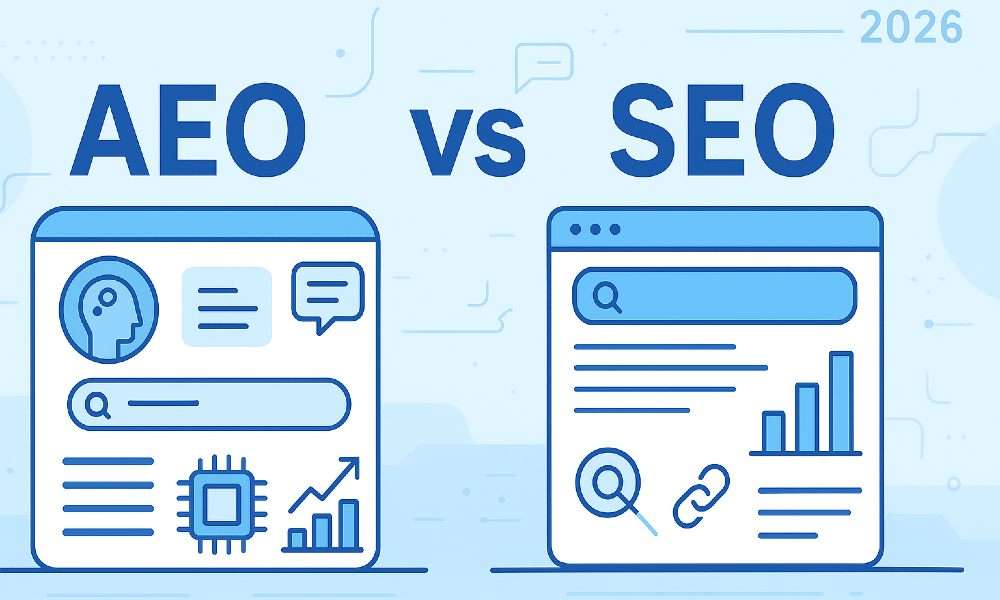
The digital landscape is continuously evolving, and 2026 marks a major shift in how search engines interpret, rank, and present information to users. Until a few years ago, Search Engine Optimization (SEO) was the primary focus for businesses looking to rank higher on Google. But now, with the rise of AI-powered search results like Google SGE, Bing Copilot, Perplexity, and voice assistants, another crucial practice has emerge, AEO (Answer Engine Optimization).
While SEO focuses on ranking webpages, AEO focuses on making your content ready for AI systems to pick, understand, and deliver as instant answers.
If you’re running a business, managing a website, or working as a digital marketer, understanding AEO vs SEO in 2026 is no longer optional, it is essential for visibility.
SEO is the practice of optimizing your website so it appears higher in organic search results. It involves optimizing content, keywords, links, user experience, website speed, and overall page relevance.
Key Components of SEO in 2026
E-E-A-T Optimization: Expertise, Experience, Authoritativeness, Trustworthiness play a bigger role in ranking.
SEO’s primary goal is to rank your website higher to attract clicks.
AEO is the process of optimizing your content for AI-driven answer engines that generate direct responses instead of showing a list of links.
Answer engines include:
These platforms do not just show links, they show answers.
Your brand visibility depends on how well your content is structured for AI understanding.
Key Components of AEO in 2026
AEO’s goal is to get your content featured in AI-generated answers, building trust and visibility.
| Factor | SEO | AEO |
|---|---|---|
| Goal | Rank webpages in SERPs | Rank answers in AI responses |
| Focus | Keywords, backlinks, ranking | Clarity, structured information, entities |
| Output | Blue links | Direct answers, summaries |
| Optimization Style | Article-style optimization | Question–answer–style optimization |
| Tools | Google Search Console, Ahrefs, SEMRush | Schema.org, NLP tools, AI testing |
| CTR Impact | Click-dependent | Visibility-based (zero-click) |
| User Behavior | Web browsing | Conversational, voice, AI search |
Search behavior has changed. Google’s AI answers and platforms like Perplexity give instant results without requiring the user to click any website.
This shift is massive.
More than half of users now rely on AI for:
If your content isn’t optimized for AI, your competitors will dominate AI-generated answers.
Google SGE results and Perplexity responses show answers first. Users may:
AEO ensures your brand appears in these answers.
Devices like:
These rely on structured data and conversational content.
AEO increases the likelihood that your content becomes the answer read aloud by voice assistants.
If AI systems pick your website for answers, your brand becomes:
This builds long-term authority.
People use AI to find:
If your website isn't optimized for answers, it won't appear where customers are searching.
Here are the top strategies to dominate answer engines:
Write content that directly answers questions:
Use headings like:
“FAQ”, “Quick Answer”, “Summary”, “In Short”.
AI loves clear, structured content.
Use Schema for:
Schema helps AI read and interpret your content precisely.
Answer engines prefer:
Add:
Since AI often answers in conversational style, your content should sound natural and direct.
Instead of only using keywords, cover the broader topic:
This improves semantic understanding, essential for AI optimization.
AI engines always prefer the latest information.
Regular updates increase your chances of being referenced.
Backlinks still matter for AEO because:
SEO supports AEO here.
Yes.
AEO doesn’t replace SEO; it enhances it.
SEO brings in organic traffic.
AEO brings AI-presence and zero-click visibility.
Businesses in 2026 need both to survive.
SEO + AEO Combined Gives:
Together, they build a future-proof digital strategy.
Ideally, both; but the priority depends on your goals:
If you want traffic → Focus on SEO
Keyword strategy, content ranking, backlinks, and local SEO.
If you want visibility in AI answers → Focus on AEO
Structured responses, schema markup, Q&A-style optimization.
If you want long-term brand authority → Combine AEO + SEO
This combination ensures your content ranks in:
Digi Enter is a leading Web Development and Digital Marketing Agency in Delhi, dedicated to helping businesses grow with powerful online solutions. We specialize in custom websites, SEO, Google Ads, social media marketing, branding, and content strategies that drive real results.
Our expert team focuses on creativity, performance, and cutting-edge technology to deliver measurable growth. Whether you're a startup or an established brand, Digi Enter ensures your digital presence stands out and attracts the right audience.
AEO vs SEO is not a competition; it's an evolution.
SEO helps you rank in search results, while AEO prepares your content for the future of AI-driven search.
In 2026, businesses that only rely on traditional SEO risk losing visibility as AI answer engines take over.
By combining both strategies; modern SEO practices and answer-focused content; you make your brand future-ready, authoritative, and discoverable across all platforms.
If you want help optimizing your website for AEO + SEO, feel free to ask and I’ll create a full strategy for you.
Don't Miss: Why Your Business Should Start Using PPC Campaigns?
In today’s fast-moving digital world, every business wants quick visibility, more leads, and better conversions. While SEO is powerful, it takes time to deliver results. This is where PPC (Pay-Per-Click) advertising becomes a game-changer. Whether you run a small local business or a large enterprise, PPC campaigns can immediately boost your online presence, drive targeted traffic, and grow your sales. But why exactly should your business start using PPC? Here are the top reasons.
PPC’s greatest strength is its lightning-fast results. As soon as your campaign goes live, your ads can appear on Google search. Unlike SEO, which requires months of effort, PPC delivers instant visibility to your target audience.
This is especially useful for:
PPC allows you to show ads only to people who are already searching for what you offer. You can target users based on:
This ensures every click you pay for comes from someone genuinely interested in your product or service. Highly targeted traffic means higher conversion rates and reduced wasted ad spend.
One of the reasons businesses love PPC is the complete control it provides over budget. You can start with as little as ?200 to ?500 per day and scale up as your results grow.
With PPC, you can:
This flexibility makes PPC perfect for small, medium, and large businesses alike.
With PPC, nothing is hidden. Google Ads provides detailed analytics to show you:
You can clearly see what is working and what needs improvement. This transparency helps you make smart marketing decisions and optimize your campaigns for maximum profit.
Even if people don’t click your ad, they still see your brand at the top of Google results. PPC helps increase brand recall and establishes your business as a trusted name. Over time, this visibility strengthens brand credibility and influences customer decisions.
For new businesses, PPC is one of the fastest ways to build a strong online presence.
People clicking on PPC ads have high intent - they are actively searching for the solution you provide. This means PPC traffic often converts better than other sources. Whether your goal is:
PPC can send customers directly to your business with measurable results.
If you serve a specific city or locality, PPC is extremely effective. Google Ads allows you to target customers within:
Local businesses like salons, builders, interior designers, doctors, and caterers benefit the most. PPC helps you appear instantly to people nearby who are ready to buy.
PPC is not a replacement for SEO - both work best together. While SEO helps you build long-term organic ranking, PPC ensures you don’t miss out on immediate opportunities. Running both simultaneously boosts:
Over time, PPC data also helps you identify high-performing keywords to strengthen your SEO strategy.
If your competitors are running PPC and you are not, you are losing business. PPC helps you outrank competitors immediately; even if their SEO is stronger. With the right bidding strategy, landing page, and ad copy, PPC gives you a direct advantage.
You can also:
This helps you win a larger share of the market.
A major strength of PPC is its incredible scalability. When you find a profitable keyword or campaign, you can increase your budget and multiply your results. Whether you want 10 leads per day or 100, PPC can scale without limitations.
As your business grows, PPC helps you reach more customers, expand to new locations, and promote more products.
Digi Enter is a leading Web Development and Digital Marketing Agency delivering high-quality, result-driven online solutions for businesses of all sizes. We specialize in custom websites, SEO, Google Ads, Social Media Marketing, and complete digital growth strategies.
Our expert team focuses on performance, creativity, and ROI to help brands build strong online visibility and generate consistent leads. At Digi Enter, we combine innovation with technology to offer reliable, affordable, and impactful digital services that elevate your business to the next level.
PPC campaigns are one of the most powerful marketing tools available today. They deliver instant visibility, targeted traffic, high-quality leads, and measurable results; everything a growing business needs. Whether you want more calls, more sales, or more brand awareness, PPC can help you achieve your goals quickly and cost-effectively.
If you haven’t started using PPC yet, now is the perfect time. With the right strategy and optimization, your business can achieve extraordinary growth through Pay-Per-Click advertising.
Don't Miss: Google Knowledge Graph What It Is and How It Helps SEO
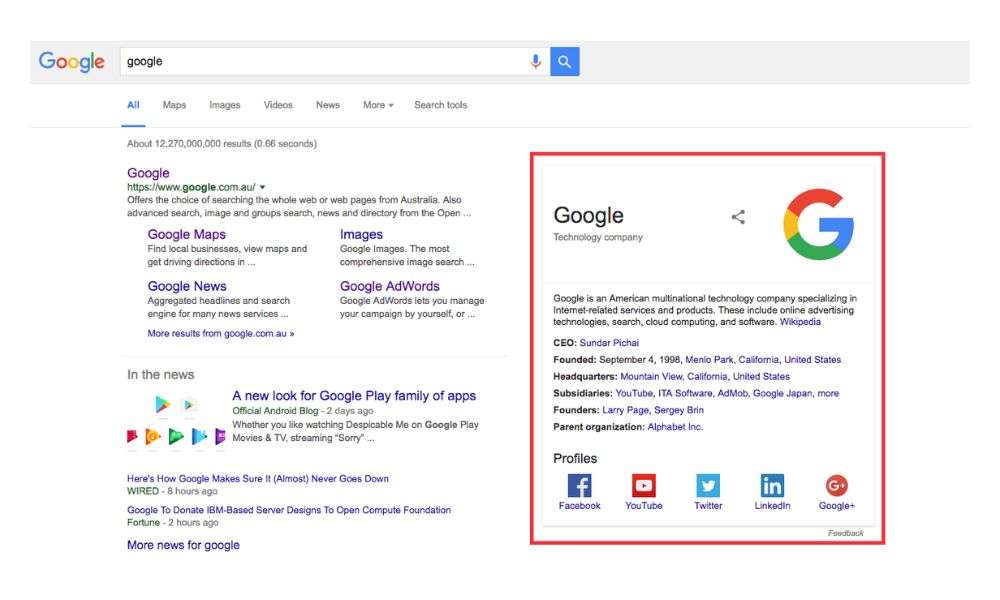
Search engine optimization (SEO) continues to evolve as Google becomes smarter and more capable of understanding user intent. One of the major technologies behind this advancement is the Google Knowledge Graph. Whether you run a business website, publish content, or manage SEO for clients, understanding the Knowledge Graph is essential for achieving better visibility in search results.
This blog explains what the Google Knowledge Graph is, how it works, why it matters, and how you can optimize your brand to appear in it.
Google Knowledge Graph is a large database that helps Google understand real-world information about people, places, organizations, things, and facts. Instead of just matching keywords, it connects information like a human mind, by recognizing relationships.
When you search for something, Google may show a Knowledge Panel on the right side (desktop) or at the top (mobile). This panel displays structured information pulled from trusted sources.
Example
If you search “Taj Mahal,” you will see:
This information comes from the Knowledge Graph, not from any single website.
Google uses the Knowledge Graph to understand entities and their relationships. An “entity” means anything that exists as a single unit, like a brand, person, movie, product, or landmark.
The final goal is to deliver accurate, quick, and context-rich information to users.
A Knowledge Panel is the visual box that appears in search results. It is created based on information stored in the Knowledge Graph.
It shows:
If your brand appears in a Knowledge Panel, it increases trust and authority instantly.
The Knowledge Graph plays a major role in modern SEO because it focuses on entity understanding rather than just keyword matching. Here are the main advantages:
Appearing in the Knowledge Graph increases your chances of showing up in multiple search elements:
Users trust search results more when they see a verified Knowledge Panel. This improves:
When Google understands your brand as an entity, your content is more likely to appear for:
For local businesses, Knowledge Graph plays a big role in:
Appearing in the Knowledge Graph is not guaranteed, but you can improve your chances by building a strong online presence and structured data.
This is the first step for local businesses.
Google evaluates your website to understand your business.
Your About page should include:
Schema markup helps Google understand your content better.
Useful schemas include:
Adding structured data increases your chances of qualifying for rich results and entity recognition.
Google uses trusted sources to verify information.
Create or update profiles on:
Your Name, Address, and Phone Number must match across all platforms.
Inconsistency reduces your credibility in the Knowledge Graph.
High-quality backlinks help Google trust your business entity.
Focus on:
Reviews build trust and help your business appear in:
Collect reviews from:
Many businesses try but fail to appear in the Knowledge Graph due to certain factors:
With the rise of AI-powered search experiences, Knowledge Graph will become even more important.
Expected Future Trends
SEO will move beyond keywords to full entity and intent optimization.
Digi Enter is a trusted digital marketing and web development company dedicated to helping businesses grow in the digital world. We specialize in SEO, Google Ads, social media marketing, website design, and content creation to deliver measurable results. With a focus on smart strategies, creative solutions, and performance-driven campaigns, Digi Enter ensures increased visibility, quality leads, and long-term business success. Whether you are a startup or an established brand, we help you build a strong online presence.
Google Knowledge Graph is a powerful system that helps Google deliver accurate, reliable, and meaningful information to users. For businesses and SEO professionals, appearing in the Knowledge Graph increases visibility, authority, and trust.
By creating a strong brand presence, implementing structured data, maintaining accuracy across platforms, and building credibility through reviews and backlinks, you can significantly improve your chances of being included in Google’s Knowledge Graph.
Understanding how the Knowledge Graph works and aligning your SEO strategy with it is essential for long-term success in modern search.
Don't Miss: What Is Responsive Web Design and Why Is It Important?

In today’s digital world, users browse websites on a wide range of devices, smartphones, tablets, laptops, desktops, and even smart TVs. Each device has different screen sizes and resolutions. If your website does not adjust automatically to these variations, visitors may find it difficult to use, leading to poor user experience and high bounce rates. At this point, Responsive Web Design (RWD) becomes crucial.
Responsive Web Design ensures that your website layout, images, text, and other elements automatically adjust to the screen size of the device being used. It provides a smooth and consistent browsing experience without the need for zooming, scrolling horizontally, or loading separate mobile websites.
Responsive Web Design is an approach in which a website is designed to adapt its structure and content based on the user’s device. Instead of creating multiple versions of the website for different screen sizes, one single website works for all devices.
Key Characteristics of Responsive Websites
Responsive Web Design works through smart use of HTML and CSS. Designers and developers create a fluid structure that follows percentage-based widths rather than fixed pixel sizes.
Fluid Layouts
Flexible Images and Media
Media Queries
Mobile-First Design
Responsive Web Design is not just a trend. It is a fundamental requirement for modern websites. Here’s why it plays such a crucial role in digital success.
A website that looks good and functions smoothly on any device creates a pleasant user experience. Visitors don’t need to zoom in or scroll sideways, which encourages them to stay longer and engage more with your content.
Benefits:
A good user experience often results in higher conversions, whether it is sales, sign-ups, or inquiries.
Search engines like Google prioritize mobile-friendly websites. In fact, Google uses mobile-first indexing, which means the mobile version of your website is considered first when ranking your pages.
SEO Benefits of Responsive Design:
A responsive website ensures that you do not lose traffic due to poor mobile compatibility.
In the past, businesses used to create separate websites for desktop and mobile users. This approach was expensive and difficult to maintain.
Responsive Web Design solves this problem.
Advantages:
Having a single, responsive website is more efficient and leads to long-term savings.
When users can browse your site comfortably on any device, they are more likely to take action.
Responsive design improves conversions because:
Businesses often notice that mobile-friendly websites receive significantly more leads and sales.
Page speed is an important factor for user experience and SEO. Responsive designs typically load faster on all devices because they use optimized layouts and compressed elements.
Fast websites help:
Users expect websites to load within a few seconds, and responsive design supports this expectation.
New devices with new screen sizes are introduced regularly. Responsive Web Design ensures that your website remains compatible with future devices as well.
Instead of redesigning the website for each new type of screen, a responsive website automatically adjusts and remains functional.
To ensure your website offers the best possible experience, it should follow some essential design principles.
Important Elements:
Following these best practices ensures that your website delivers a smooth browsing experience to every user.
Many people confuse responsive design with adaptive design. While they both aim to improve mobile experience, they work differently.
Responsive Design
Adaptive Design
Responsive design is usually preferred because it is more flexible and easier to manage.
Digi Enter is a professional digital marketing and web development agency dedicated to helping businesses grow online with smart, result-driven strategies. We specialize in SEO, social media marketing, PPC advertising, website development, and content creation tailored to each client’s unique goals. Our team focuses on delivering measurable outcomes, enhanced brand visibility, and improved customer engagement.
At Digi enter, we combine creativity with data-driven techniques to build powerful digital experiences that elevate your business. Whether you are a startup or an established brand, we provide end-to-end solutions that ensure long-term success in the competitive digital landscape.
Responsive Web Design is an essential component of modern website development. With the increasing number of mobile users, businesses must ensure that their websites deliver a seamless experience across all devices. A responsive website not only enhances user satisfaction but also improves search rankings, helps generate leads, and contributes to overall brand credibility.
Whether you are designing a new website or upgrading an existing one, adopting a responsive approach is one of the best decisions you can make. It prepares your online presence for the future and ensures that your audience can engage with your business anytime and anywhere.
Don't Miss: How to Create a Winning Digital Marketing Strategy for Your Brand

In today’s highly competitive digital landscape, having a strong online presence is not just an advantage, it’s a necessity. Whether you are a startup, small business, or established brand, your success depends on how effectively you reach, engage, and convert your target audience online. A well-planned digital marketing strategy helps you achieve these goals systematically and measurably.
In this blog, we’ll explore how to create a digital marketing strategy for your brand, covering every essential step from market research to performance tracking.
Before diving into marketing tactics, it’s important to identify your core business objectives. Ask yourself:
Your digital marketing strategy should directly align with your business goals. For example:
By defining your goals clearly, you create a direction for all your marketing activities and measure results more effectively.
A successful marketing strategy always starts with a deep understanding of your audience. You need to know who your potential customers are, what they want, and where they spend their time online.
Steps to Identify Your Audience:
Use tools like Google Analytics, Facebook Audience Insights, or customer surveys to gather accurate data. Once you know your audience, you can craft personalized campaigns that resonate with them.
Analyzing your competitors helps you understand the market landscape and uncover opportunities. Identify your top competitors and examine their:
Pro Tip: Use tools like SEMrush, Ahrefs, or SpyFu to analyze competitor keywords and ad campaigns.
By studying what works (and what doesn’t) for your competitors, you can design a more refined and effective strategy for your brand.
Your brand identity is how people perceive you online. It includes your logo, color scheme, tone of voice, and overall communication style. A strong brand identity creates trust and helps your audience recognize you instantly.
To build a consistent brand identity:
Consistency not only improves brand recall but also builds credibility in the long run.
Not every platform will work for every business. Choose marketing channels based on where your audience is most active and where you can achieve your goals effectively.
Common Digital Marketing Channels Include:
Focus on channels that deliver the best ROI for your business and gradually expand as you grow.
Content is the heart of digital marketing. Without valuable content, even the best strategy will fail. High-quality content attracts, informs, and converts your audience.
Types of Content to Include:
Content Tips:
End with a clear call-to-action (CTA) encouraging readers to take the next step.
Search Engine Optimization ensures that your brand is visible to people searching for products or services like yours.
Key SEO Practices:
A strong SEO foundation ensures long-term organic visibility and helps you attract qualified traffic without heavy ad spending.
Budgeting is an essential part of planning your digital marketing strategy. Your budget will determine which channels and campaigns you can prioritize.
Budget Breakdown Example:
Allocate your resources wisely and monitor ROI regularly to ensure efficient spending.
What gets measured gets improved. Tracking your campaign performance helps you understand what’s working and where to improve.
Use Analytics Tools Like:
Monitor key metrics such as:
By analyzing these results, you can make data-driven decisions and refine your strategy for better performance.
Digital marketing is constantly changing. Strategies that succeeded last year may no longer be effective today. Keep yourself informed about the latest trends, algorithms, and digital tools.
Current Trends to Watch:
Adapting to new trends early helps your brand stay ahead of competitors and connect better with modern consumers.
Creating a winning digital marketing strategy requires research, planning, creativity, and continuous improvement. It’s not a one-time process but an ongoing effort to build your brand’s online presence, engage your audience, and drive consistent growth.
By setting clear goals, understanding your audience, producing valuable content, and tracking performance regularly, your brand can build a powerful and results-driven digital marketing strategy that stands the test of time.

Your website is the first place people visit when they want to learn about your business. Before they read your content or explore your services, they notice how your website looks and feels. That’s why a decent web design is more than just visuals, it plays a major role in building impressions, trust, and long-term engagement.
In today’s digital world, your website is your identity. A well-designed website can help you attract visitors, keep them engaged, and convert them into customers. Let’s explore how.
People judge your business within a few seconds of landing on your website. A clean, attractive, and modern web design instantly creates a positive impression. On the other hand, a cluttered or outdated design can turn visitors away—even if your products or services are great.
A good web design helps your brand appear credible, professional, and trustworthy. It encourages users to stay longer and explore further.
A decent web design isn’t only about colours and images; it also focuses on user experience (UX). This includes:
When users find your website simple and convenient to use, they naturally want to stay longer. This increases page views, reduces bounce rate, and leads to stronger engagement, important factors for building online impressions.
Your website is a reflection of your brand personality. The right combination of colours, typography, images, and spacing helps visitors understand what your brand represents.
For example:
A visually appealing design helps customers remember your brand and creates a lasting impression that sets you apart from competitors.
More than 70% of users browse websites on their smartphones. So if your website isn’t mobile-friendly, you risk losing a majority of your audience.
A responsive web design adjusts automatically to any device, mobile, tablet, or desktop. This improves user satisfaction and drives better impressions because visitors can browse smoothly without zooming, scrolling awkwardly, or waiting for heavy elements to load.
Speed matters, a lot. If your website takes more than 3 seconds to load, users start dropping off quickly.
Fast-loading websites create a strong first impression and encourage visitors to explore more. Google also ranks faster websites higher, helping you gain more organic traffic.
A well-designed website guides visitors through a smooth flow, from browsing to taking action. This is done through:
When visitors can quickly understand what you offer and how to take the next step, they feel confident in your business. This strengthens impressions and boosts conversions.
A decent web design is a powerful tool for creating strong impressions online. It enhances user experience, builds trust, improves engagement, and helps your brand stand out in the competitive digital world.
Whether you're running a small business or an established brand, investing in quality web design will always bring long-term value. After all, your website isn’t just a digital address, it’s your first impression, your brand identity, and your most important online asset.

In the dynamic digital landscape of today, businesses, especially SMEs, are constantly seeking ways to enhance their online presence and drive growth through effective digital marketing strategies. As Google continues to dominate the online sphere, partnering with a trusted Google Partner agency becomes crucial for SMEs aiming to navigate the complexities of online advertising and maximize their returns on investment. In this review, we delve into Digienter, hailed as one of the best SME Google Partner Agencies in India, to understand why it stands out in the realm of digital marketing.
Digienter is a leading digital marketing agency based in India, specializing in providing tailored solutions to SMEs looking to harness the power of Google's advertising platforms. As a certified Google Partner in India, Digienter boasts a team of seasoned professionals equippedwith extensive expertise in Google Ads, Analytics, and other digital marketing tools.
One of the key factors that set Digienter apart is its comprehensive suite of services tailored specifically for SMEs. From crafting targeted Google Ads campaigns to optimizing websites for better search engine visibility, Digienter offers a range of services aimed at driving qualified traffic and generating leads for its clients. Whether its PPC (Pay-Per-Click) advertising, display ads, or remarketing campaigns, Digienter employs advanced strategies to ensure maximum ROI for every advertising dollar spent by its clients. Visit our website and Check out the Digienter Reviews of our clients.
What truly distinguishes Digienter is its client-centric approach towards digital marketing. Unlike larger agencies that often prioritize big-budget clients, Digi Enter understands the unique challenges faced by SMEs and works closely with each client to develop customized solutions aligned with their business goals and budget constraints. By fostering long-term partnerships and prioritizing client satisfaction, Digienter has earned a reputation for delivering results-driven digital marketing strategies that exceed expectations.
Transparency and accountability are at the core of Digienter's ethos. Throughout every stage of the client engagement process, Digienter maintains open communication channels, providing regular updates and performance reports to ensure clients are kept informed about the progress of their campaigns. With a commitment to delivering measurable results and maximizing ROI, Digienter instils confidence in its clients by offering full transparency into its methodologies and strategies.
The success of Digienter can be attributed to its track record of delivering tangible results for its clients. By leveraging data-driven insights and innovative digital marketing techniques, Digienter has helped numerous SMEs achieve significant growth and establish a strong online presence. From increasing website traffic and leads to boosting conversion rates and revenue, Digienter's success stories serve as a testament to its prowess in driving business outcomes through strategic digital marketing initiatives.
Conclusion: In conclusion, Digienter emerges as a standout choice for SMEs seeking a reliable Google Partner agency in India. With its expertise, client-centric approach, transparency, and proven track record of success, Digienter epitomizes excellence in the realm of digital marketing. By partnering with Digienter, SMEs can unlock the full potential of Google's advertising platforms and embark on a journey towards sustainable growth and success in the digital age. In the competitive landscape of digital marketing, choosing the right agency can make all the difference. With Digienter, SMEs can rest assured knowing they have a trusted partner dedicated to helping them achieve their business objectives and thrive in the ever-evolving digital ecosystem.
Our work speaks through the trust placed in us by top names across the globe.